 SkilletLore
Explainers
The overlooked step that keeps stored cast iron ready to cook
Cleaning is only part of putting a pan away.
Before you start
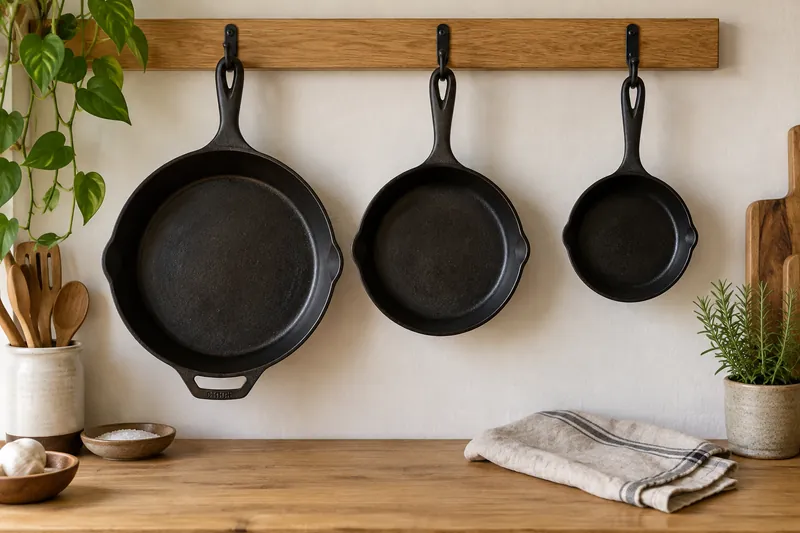
Cleaning is only part of putting a pan away. Storage decides what happens to the surface between tonight’s dinner and the next time you use it.
Look at the whole storage space
A pan may be dry when you finish washing yet sit beneath a damp lid or against another wet item. Check the stack, shelf and surrounding cookware. A cabinet near a source of moisture creates different conditions from an open shelf. The storage plan should fit the space you actually have.
Separate surface protection from padding
A thin oil film on bare iron and a dry separator between pans do different jobs. The first concerns the metal surface; the second helps prevent contact damage. Neither justifies putting away damp cookware. Follow the maker’s storage advice for enamel and bare iron separately.
Plan a small-kitchen arrangement
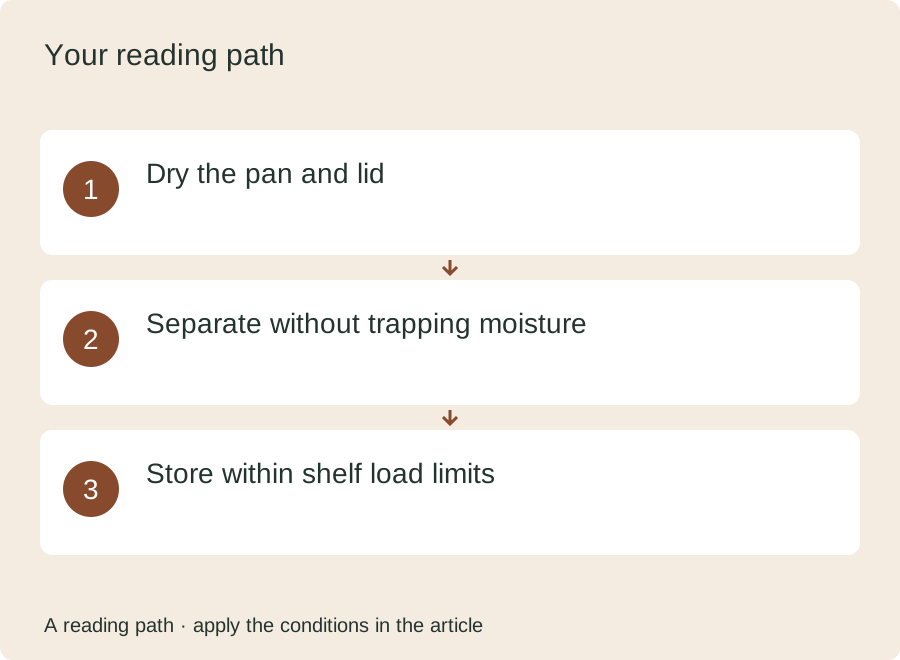
Put the pan used most often where it can be lifted safely without moving an unstable stack. Keep lids and handles from placing pressure on vulnerable surfaces. A rack is only helpful if its mounting and load capacity suit the cookware. Heavy pans should not depend on an improvised hook or an uncertain shelf.
A storage spot has to work on a busy evening
Imagine that the only free cupboard shelf requires lifting a heavy pan above shoulder height while holding the door open. That location may look tidy but be awkward in real use. Compare a lower, stable position with enough support and room to retrieve the pan safely. Also consider whether stacking will trap residual moisture or bring vulnerable surfaces into unsuitable contact. The best storage solution is one you can use after an ordinary dinner, when the sink is busy and your attention is divided, rather than only when the kitchen has been staged for a photograph.
Check before the next cook
Look for moisture, new orange discoloration, unusual residue or a changed surface. If something has appeared, identify it before cooking. A quick dry inspection gives more useful information than applying fresh oil over whatever you find.
Practical check: what to observe
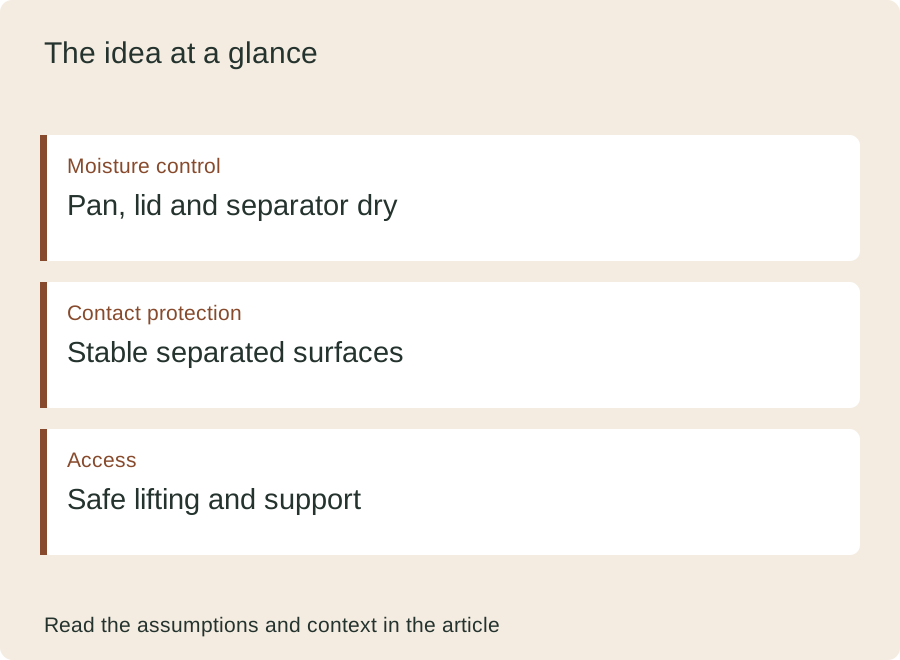
Start with the situation described in this article, then follow the applicable product instructions. Keep a short note of what you observe so a later decision has context.
- Dry the pan and lid
- Separate without trapping moisture
- Store within shelf load limits
Can I leave the lid tightly on?
Follow the product’s storage guidance. Avoid closing moisture inside a vessel; check that both the lid and pan are fully dry.
For more context, see the topic FAQ and glossary. A reference value or example should be read with its units, assumptions and product-specific conditions.
Sources and scope
The reading below provides context for the relevant care or brewing principles. The article’s scenarios and decision questions are original editorial explanations, not independent product tests. Read the editorial policy for sourcing, AI assistance and corrections.
Put the explanation to work
Continue reading
Spot a questionable claim or a calculation issue? Read our correction process and contact information. Examples and illustrations are educational; they do not establish product suitability or a laboratory result.