 SkilletLore
Explainers
Watching a cast-iron seasoning video? Use this checklist first
Turn a seasoning demonstration into a usable plan by checking the pan, handle limits, preparation and follow-up care.
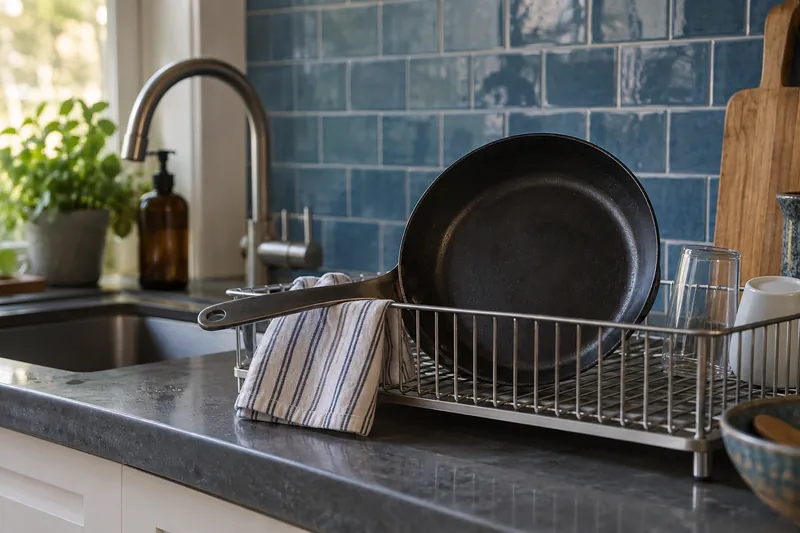
Before you start
A seasoning video is easiest to use when you check equipment compatibility before following the steps. The Lodge demonstration below introduces seasoning and maintenance. Our checklist helps you decide which details to verify for your own pan.
What the demonstration offers
In Lodge’s seasoning video, Chef Kris introduces what seasoning means, how it differs from maintenance and when to renew it. Treat the video as a visual companion to written product instructions. The presenter works for a cookware manufacturer; this is a manufacturer demonstration, not an independent comparison of every method.
You do not need to memorize the sequence while handling a hot pan. Watch first, make a short plan, and keep the appropriate written instructions available.
Check the pan before the oven
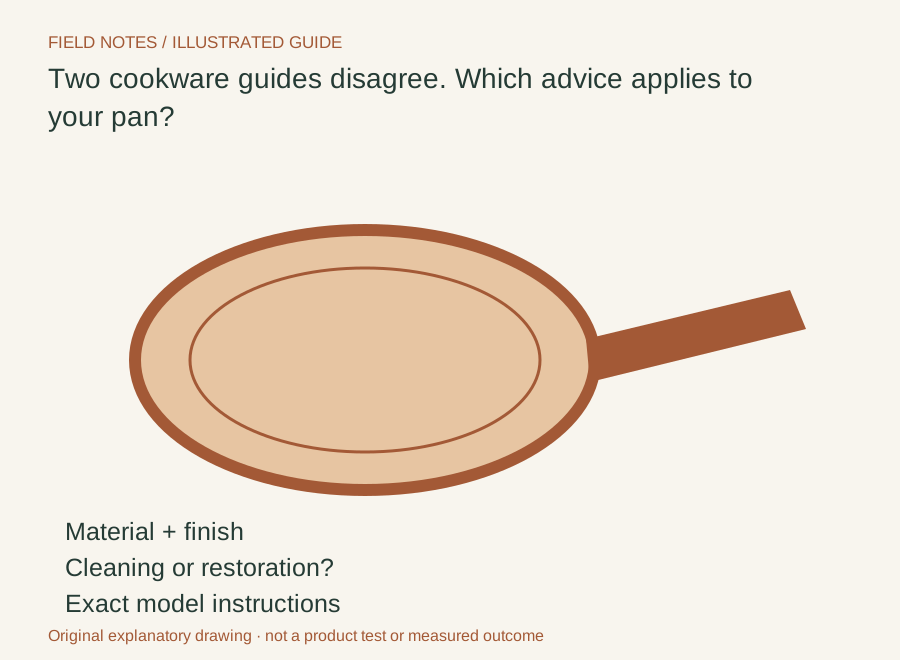
Identify whether the cooking surface is bare seasoned metal, enamel or another coating. Then check the entire assembled item: body, handle, grips and any lid you intend to use. A metal-looking handle is not enough evidence of an unrestricted oven rating.
The same check matters when moving from an iron skillet demonstration to a carbon-steel pan. Made In’s care guide is one product-specific reference; another manufacturer’s pan may need different preparation.
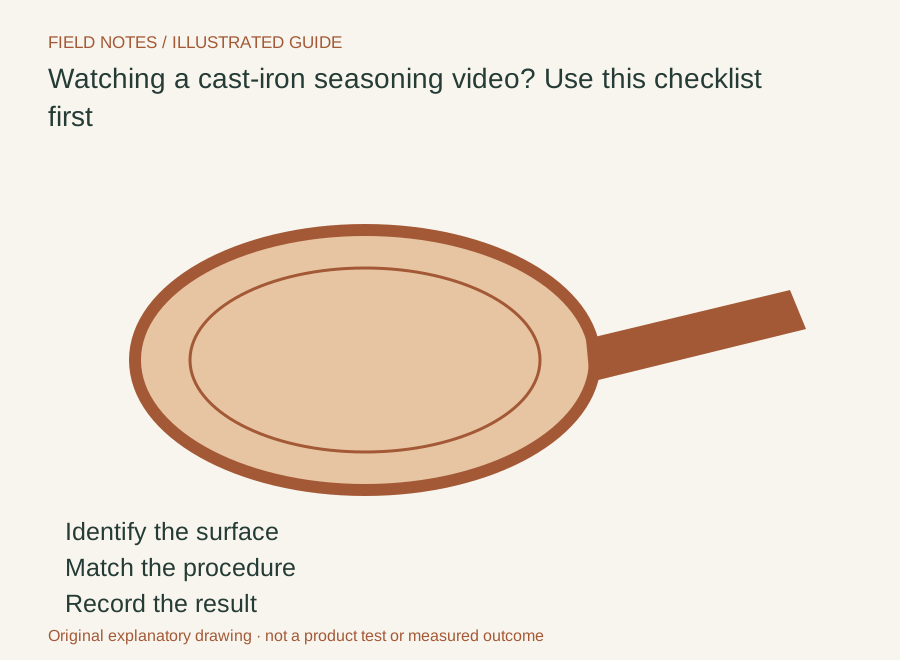
Make a watch-and-check sheet
| While watching | Before doing it yourself |
|---|---|
| Notice which surface is being treated | Match it to the identified surface on your pan |
| Note whether the pan is new or being restored | Decide whether you are maintaining or repairing |
| Observe the application of oil | Read the maker’s written application instructions |
| Note how the hot item is handled | Prepare dry protection and a clear resting area |
| Watch the cooling stage | Leave enough time before inspecting or storing |
This sheet is an editorial planning aid. It deliberately does not transplant a single oven setting to every brand and handle combination.
Do not let editing hide the waiting
A short video compresses a longer task. A cut between two shots may omit cooling, preparation or cleanup. Write down those transitions as questions rather than guessing what happened between frames.
Plan the work when you can stay with the process. Keep the work area clear, follow the appliance’s operating instructions and avoid treating visible smoke as a target to maximize. If the cookware instructions and the video differ, resolve that conflict before heating.
Evaluate a cooled surface, then normal cooking
After the specified cooling period, inspect the pan under consistent light. Record appearance and any tackiness separately. A more uniform color is not automatically proof of better cooking performance.
If the surface is sticky, our sticky-seasoning guide offers a focused diagnostic path. Avoid immediately adding another heavy layer just to make the pan look darker.
Keep ordinary care ordinary
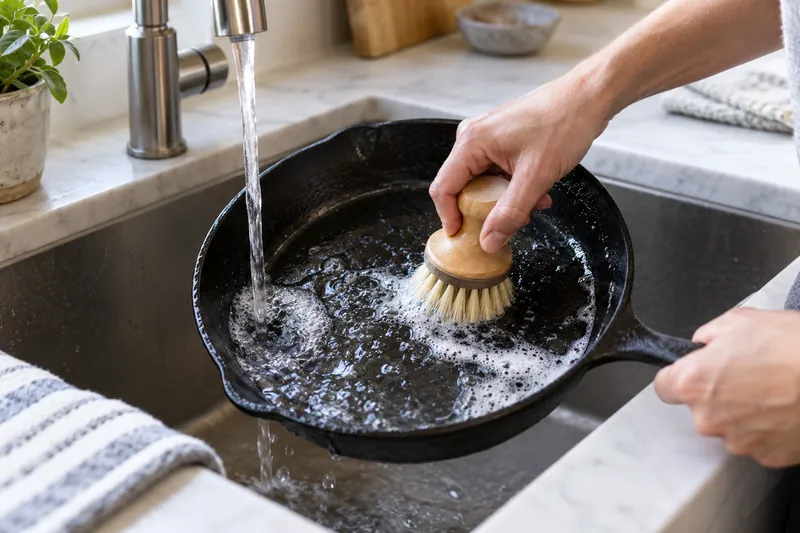
Once the pan is usable, return to its normal cleaning routine. Lodge’s care page describes washing, thorough drying and a light application of oil for its seasoned iron. A full restoration sequence should not become the default response to every meal.
The point of a good demonstration is to make the next action clearer. Your completed checklist should fit beside the pan’s manual and be understandable the next time you need it.
Practical check: what to observe
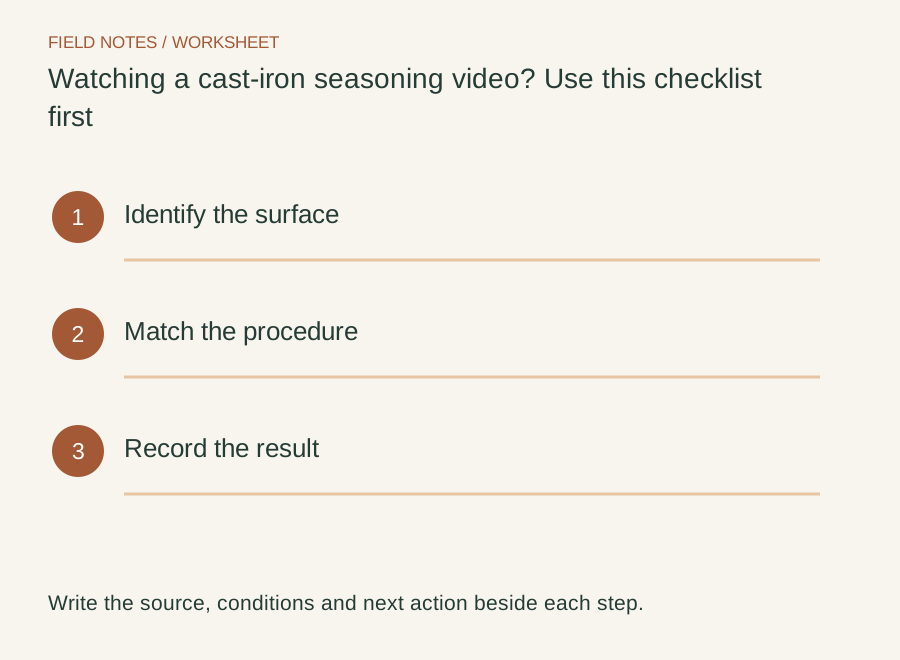
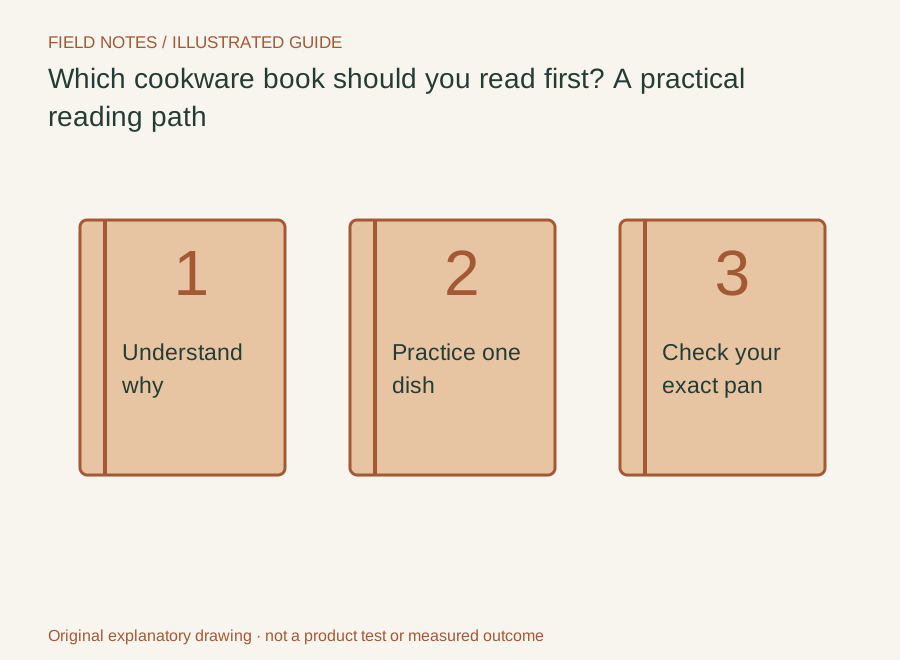
Before starting, locate your pan’s instructions and set out the necessary equipment. Write down what will count as a successful result after cooling, rather than judging the pan only by its color on camera.
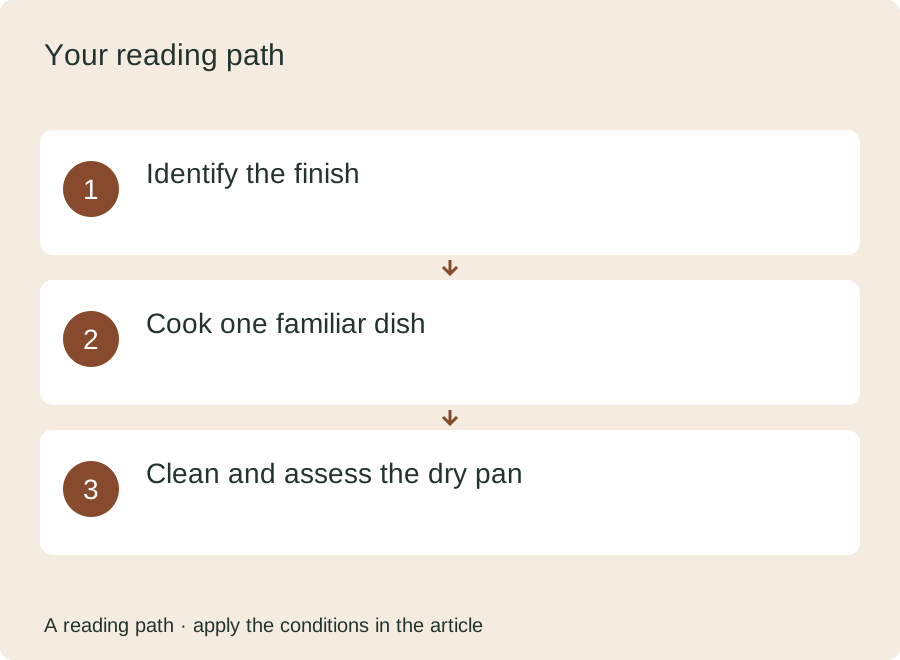
- Identify the surface
- Match the procedure
- Record the result
Does a dark, glossy video thumbnail prove a good seasoning layer?
No. Lighting, oil on the surface and editing can change its appearance. Assess a clean, dry pan and its behavior in normal use; a photograph cannot establish coating performance.
For more context, see the topic FAQ and glossary. A reference value or example should be read with its units, assumptions and product-specific conditions.
Watch with context
Lodge: seasoning and maintenance with Chef Kris
From Lodge Cast Iron. An external demonstration to accompany the explanation. Follow the instructions for your own equipment or garment; a video is not evidence for every claim on this page.
Player requested. If the player remains blank or reports an error, use the direct YouTube link below.
Loading the player connects to YouTube and may share your IP address and browser information. YouTube may process data and use storage under its own policies. Video privacy details.
If playback is unavailable, watch “Lodge: seasoning and maintenance with Chef Kris” on YouTube.
Sources and scope
The reading below provides context for the relevant care or brewing principles. The article’s scenarios and decision questions are original editorial explanations, not independent product tests. Read the editorial policy for sourcing, AI assistance and corrections.
- Lodge / Chef Kris — Seasoning demonstration
External manufacturer demonstration. Check compatibility with your own cookware.
- Lodge — How to Clean Seasoned Cast Iron
Applies to the seasoned cast iron described by this manufacturer; not a universal restoration protocol.
- Made In — Carbon Steel Care Guide
Product-specific carbon-steel guidance. Brand recommendations are identified as such.
Put the explanation to work
Continue reading
Spot a questionable claim or a calculation issue? Read our correction process and contact information. Examples and illustrations are educational; they do not establish product suitability or a laboratory result.