 SkilletLore
Explainers
Cast iron for beginners: the guide that makes it less confusing
A new skillet does not need a complicated initiation ritual.

Before you start
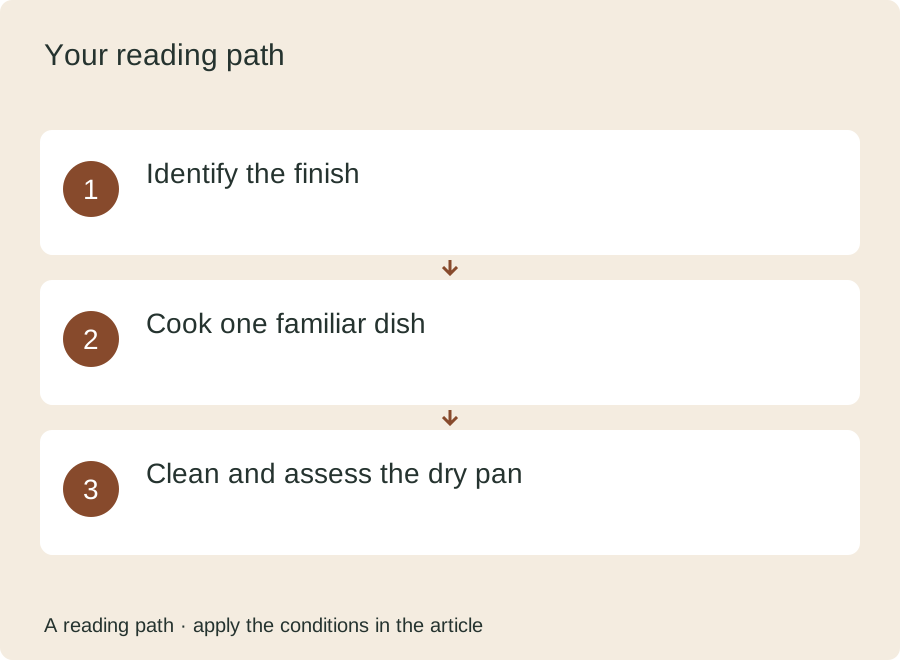
A new skillet does not need a complicated initiation ritual. Start by identifying its finish, understanding the care instructions and learning one repeatable cooking routine.
First, identify the surface
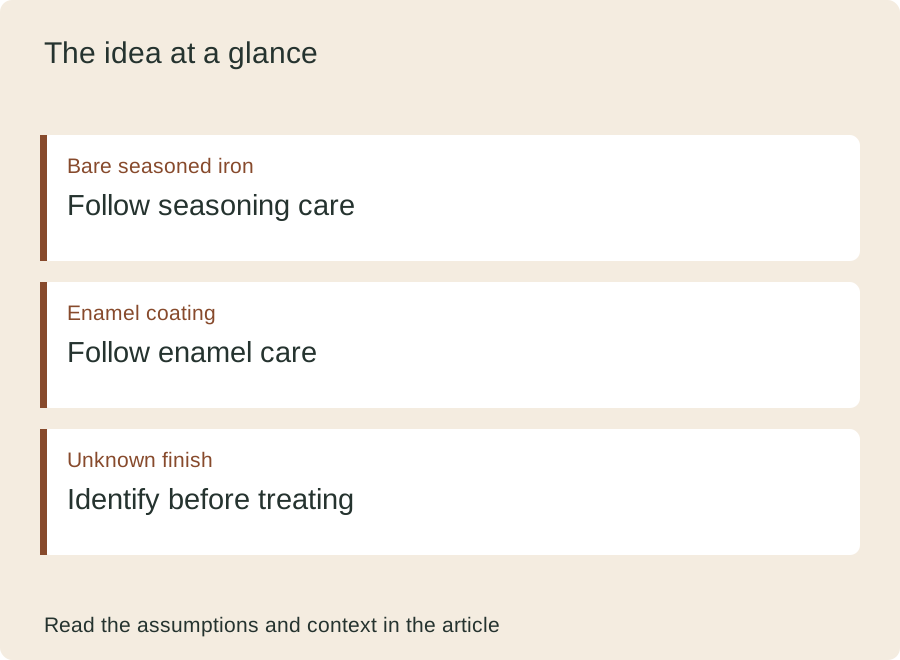
Bare seasoned iron and enameled iron are not interchangeable. A black interior can be either one, so check the model rather than relying on color. A preseasoned bare-iron pan may be ready for ordinary cooking after the manufacturer’s initial cleaning. Enamel should not be treated as a project to strip and season. This first distinction prevents many avoidable mistakes.
Separate cooking from maintenance
A seasoning layer is part of the surface, while cooking fat is something you add for a particular meal. Neither makes heat control irrelevant. A beginner benefits more from cooking one familiar dish consistently than from applying repeated coats of oil without a reason. Notice the burner setting, how the food browns and when it releases.
A useful first-week approach
Choose a simple dish you already know. Use the same pan and burner, and note one result after each cook: even browning, sticking in the center or a sticky surface after storage. Change only the relevant part next time. If three variables change together, you cannot tell whether the improvement came from the pan, the heat or the recipe.
A first-week note you can actually use
Imagine that the same scrambled-egg recipe sticks on Monday but releases more easily on Wednesday. On Wednesday you also changed the burner, added more fat and cooked a smaller portion. The result is encouraging, but it cannot tell you which change helped. A more useful next note records the pan, burner, portion, fat and preparation sequence. Repeat that successful combination before trying another adjustment. This makes the pan less mysterious: you are learning a routine you can return to, rather than trying to earn an ideal-looking coating before you are allowed to cook.
Finish the routine
Follow the maker’s wash, drying and storage directions. Do not let a desire for a perfectly black surface distract you from removing food residue. The practical goal is a clean, usable pan. Seek product-specific advice if you see a crack, loose coating or a surface you cannot identify.
Practical check: what to observe
Start with the situation described in this article, then follow the applicable product instructions. Keep a short note of what you observe so a later decision has context.
- Identify the finish
- Cook one familiar dish
- Clean and assess the dry pan
Do I need to reseason a new pan immediately?
Not automatically. Read the initial-use directions for the exact model. Extra seasoning is a response to a surface need, not a required ceremony for every new skillet.
For more context, see the topic FAQ and glossary. A reference value or example should be read with its units, assumptions and product-specific conditions.
Watch with context
How to Clean a Cast Iron Skillet
From Lodge Cast Iron. An external demonstration to accompany the explanation. Follow the instructions for your own equipment or garment; a video is not evidence for every claim on this page.
Player requested. If the player remains blank or reports an error, use the direct YouTube link below.
Loading the player connects to YouTube and may share your IP address and browser information. YouTube may process data and use storage under its own policies. Video privacy details.
If playback is unavailable, watch “How to Clean a Cast Iron Skillet” on YouTube.
Sources and scope
The reading below provides context for the relevant care or brewing principles. The article’s scenarios and decision questions are original editorial explanations, not independent product tests. Read the editorial policy for sourcing, AI assistance and corrections.
Put the explanation to work
Continue reading
Spot a questionable claim or a calculation issue? Read our correction process and contact information. Examples and illustrations are educational; they do not establish product suitability or a laboratory result.