 SkilletLore
Explainers
Why is your cast iron sticky after seasoning?
A sticky finish is a reason to inspect the surface before adding more oil.
Before you start
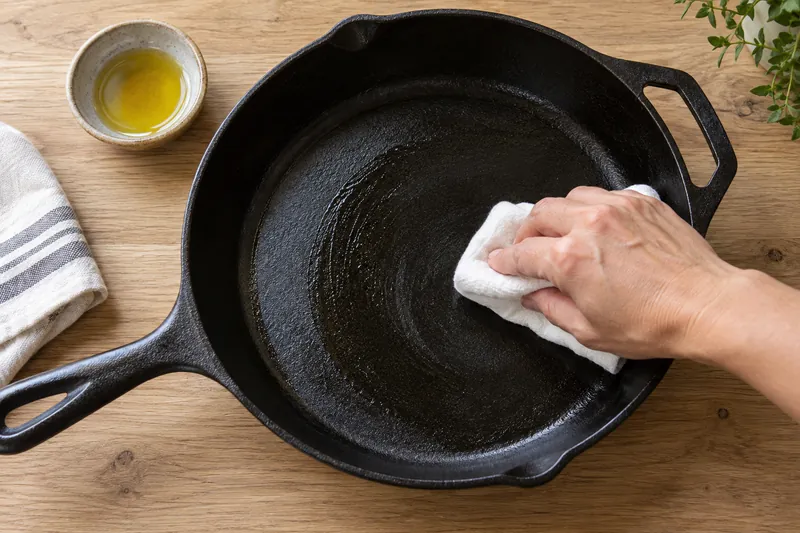
A sticky finish is a reason to inspect the surface before adding more oil. Another coat can hide the problem for a moment while adding to it.
Identify when the tackiness appears
Was the pan sticky immediately after cooling, or only after sitting in a cupboard? Note what oil was applied and whether visible pools remained. Food residue, a heavy oil layer and an incompletely cured surface can be confused with one another. The timing is useful evidence even when you cannot identify the chemistry from appearance.
More oil is not always more protection
A very thin application behaves differently from a thick patch. Rims, embossed marks and handle junctions can collect oil that is easy to overlook. When following a seasoning method, inspect these places as carefully as the cooking floor. Judge the cooled surface rather than the glossy appearance of wet oil.
A useful troubleshooting record
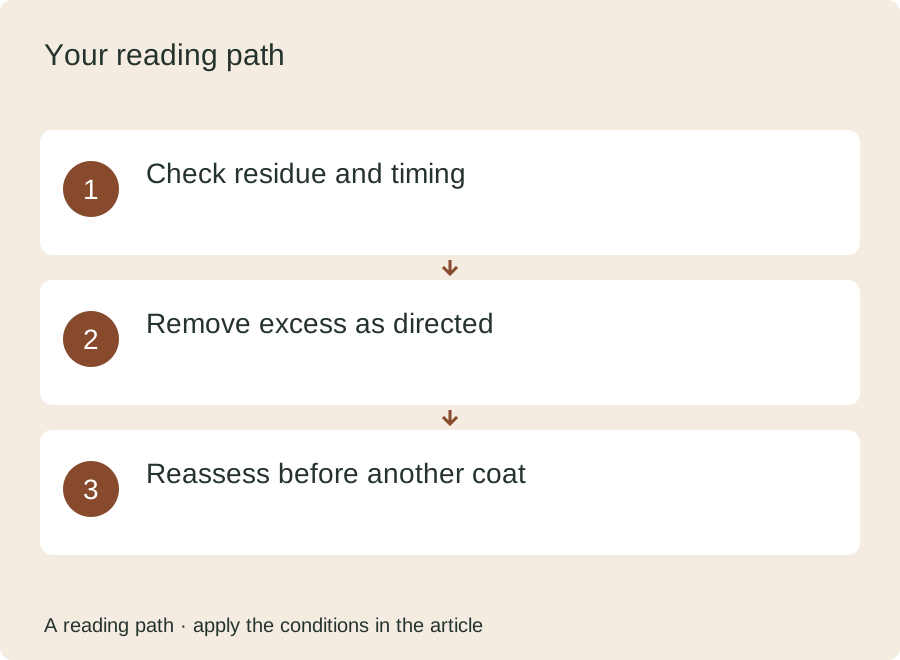
Write down the oil, the maker-approved heating method and the amount wiped away. Photograph the dry pan in the same light before the next attempt. Change one part of the process. If you switch oil, temperature and cleaning method simultaneously, a successful result will not tell you which difference mattered.
Compare the clean pan with the stored pan
A useful description might be: the dry pan felt clean after washing, but the surface felt tacky the next morning after an oil application. That timing points to a different question from food residue that was never fully removed. Record the oil, amount and process you used, and compare them with the maker’s care directions. Do not jump from tacky to a diagnosis of failed polymer chemistry. The practical first task is identifying when the change appeared and whether ordinary compatible cleaning resolves it before considering a more involved treatment.
Choose a proportionate response
Follow the manufacturer’s troubleshooting advice for cleaning excess residue and reseasoning if needed. Do not jump from a tacky patch to chemical stripping without identifying the finish. A routine surface problem is not a reason to improvise a stronger cleaning mixture.
Practical check: what to observe
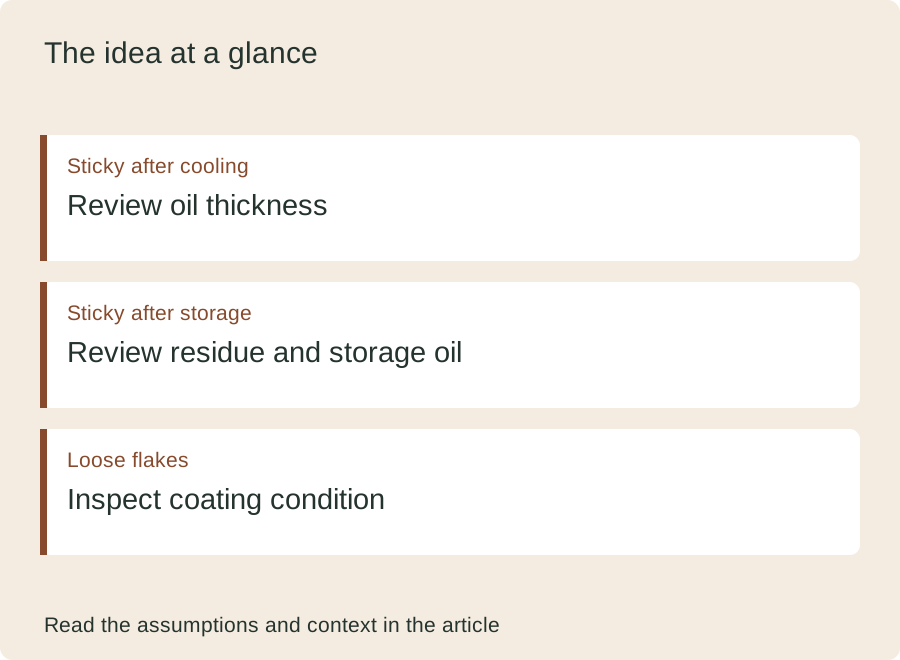
Start with the situation described in this article, then follow the applicable product instructions. Keep a short note of what you observe so a later decision has context.
- Check residue and timing
- Remove excess as directed
- Reassess before another coat
Should I keep adding seasoning layers?
Only after dealing with the existing problem. A clean, appropriate surface is a better starting point than a stack of sticky layers.
For more context, see the topic FAQ and glossary. A reference value or example should be read with its units, assumptions and product-specific conditions.
Watch with context
How to Clean a Cast Iron Skillet
From Lodge Cast Iron. An external demonstration to accompany the explanation. Follow the instructions for your own equipment or garment; a video is not evidence for every claim on this page.
Player requested. If the player remains blank or reports an error, use the direct YouTube link below.
Loading the player connects to YouTube and may share your IP address and browser information. YouTube may process data and use storage under its own policies. Video privacy details.
If playback is unavailable, watch “How to Clean a Cast Iron Skillet” on YouTube.
Sources and scope
The reading below provides context for the relevant care or brewing principles. The article’s scenarios and decision questions are original editorial explanations, not independent product tests. Read the editorial policy for sourcing, AI assistance and corrections.
Put the explanation to work
Continue reading
Spot a questionable claim or a calculation issue? Read our correction process and contact information. Examples and illustrations are educational; they do not establish product suitability or a laboratory result.