 SkilletLore
Perspectives
Does expensive cookware actually make a kitchen feel considered?
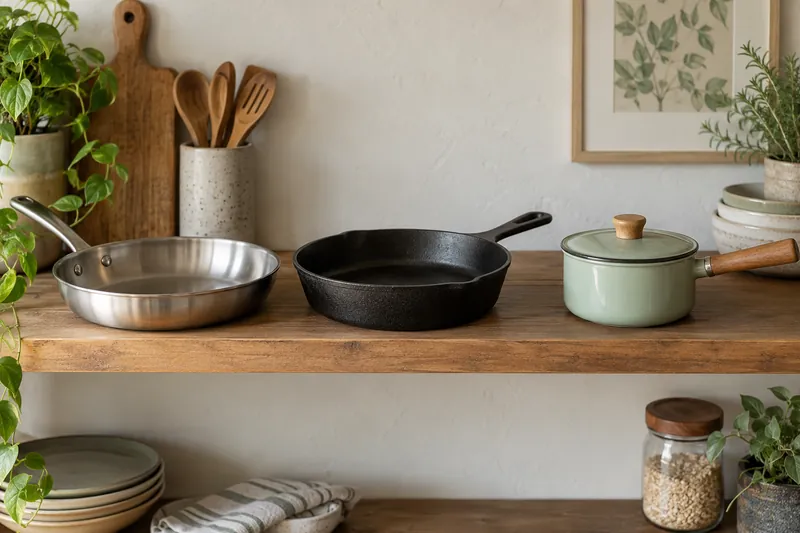
A thoughtful kitchen is not necessarily the one with the most expensive pans.
Perspective. An editorial reflection on preferences and everyday life. It does not report a survey or classify people by their tastes.
Before you start
A thoughtful kitchen is not necessarily the one with the most expensive pans. The more interesting question is whether its tools fit the way someone cooks.
Visible price is an easy shortcut
A recognizable object can communicate a style quickly. That makes it tempting to confuse the object with the judgment behind it. Yet choosing well also involves less visible decisions: how a handle feels, whether a pan fits the burner and whether the owner will actually maintain it.
Considered choices solve specific problems
A carefully chosen inexpensive pan may be more useful than a prestigious one bought without a task in mind. Conversely, a costly item can be worthwhile when it solves a real handling or construction need. Price is one input. It does not, by itself, prove wastefulness or discernment.
Try the private-kitchen test
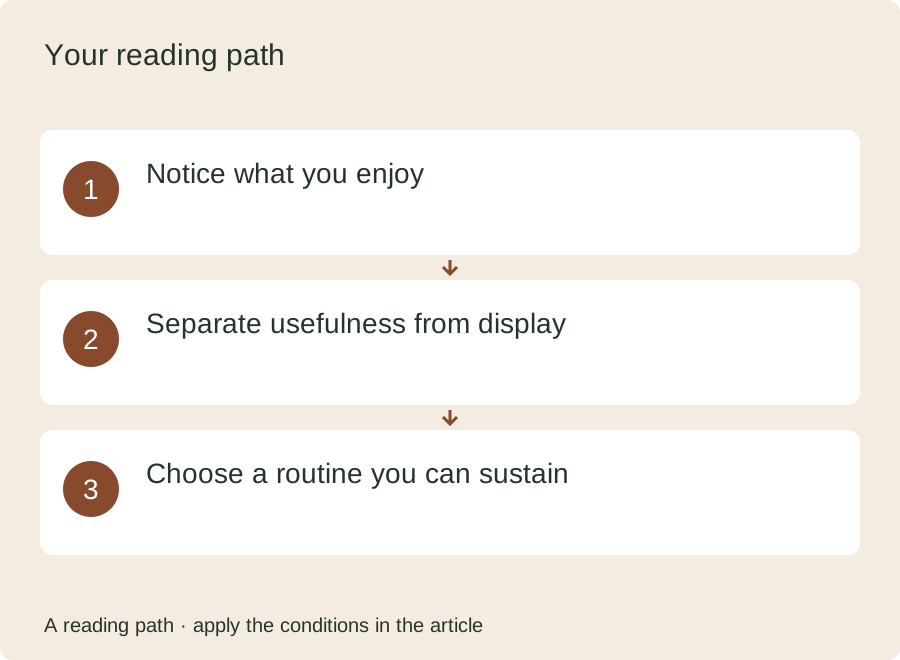
Imagine the cookware will never appear in a photograph. Which pieces would you still choose? Which would be easiest to lift, clean and store? This thought experiment shifts attention from display to use. It also makes room for mixed collections built over time rather than a perfectly matching set.
What a guest is likely to experience
A guest encounters the meal, the welcome and the ease of being in the room. They may never notice the pan’s price or construction. If a purchase makes cooking easier for you, that benefit can be worthwhile. If it mainly creates pressure to keep the kitchen looking untouched, ask whether it is serving the experience you wanted. This is not an argument against beautiful objects. It is an invitation to give beauty a clear place in the decision alongside comfort, function and the other things your budget could support.
Taste includes knowing when to stop
An organized collection can be small or large. What matters is whether another purchase has a clear role. If a new pan duplicates a job already done comfortably, the money and storage might serve you better elsewhere. That is an editorial perspective, not a rule about how much anyone should spend.
Practical check: what to observe
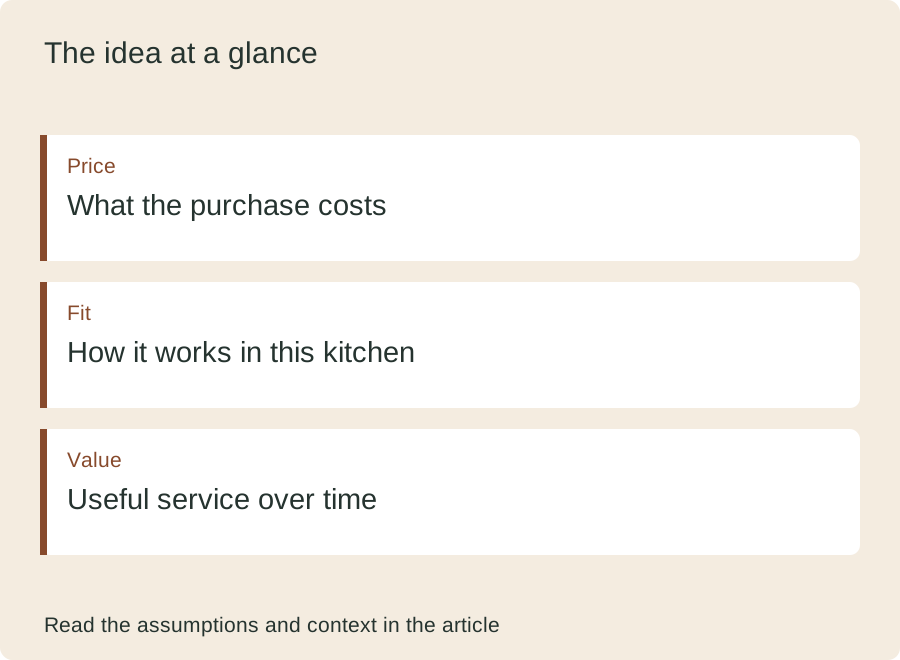
Use the questions below to consider your own preferences. This article is an editorial perspective, not a survey or a way to classify other people.
- Name the actual cooking problem
- Assess handling and maintenance
- Judge value through use
Can a low-cost pan be a good choice?
Yes. Suitability depends on the actual product and task. An object’s price cannot stand in for examining those conditions.
For more context, see the topic FAQ and glossary. A reference value or example should be read with its units, assumptions and product-specific conditions.
Sources and scope
This is original editorial commentary. Examples of preferences are illustrative, not findings from a survey or psychological study. Read the editorial policy for sourcing, AI assistance and corrections.
Put the explanation to work
Continue reading
Spot a questionable claim or a calculation issue? Read our correction process and contact information. Examples and illustrations are educational; they do not establish product suitability or a laboratory result.