 SkilletLore
Perspectives
Why do some people become attached to a cast iron pan?
A familiar skillet can feel like more than a kitchen tool.
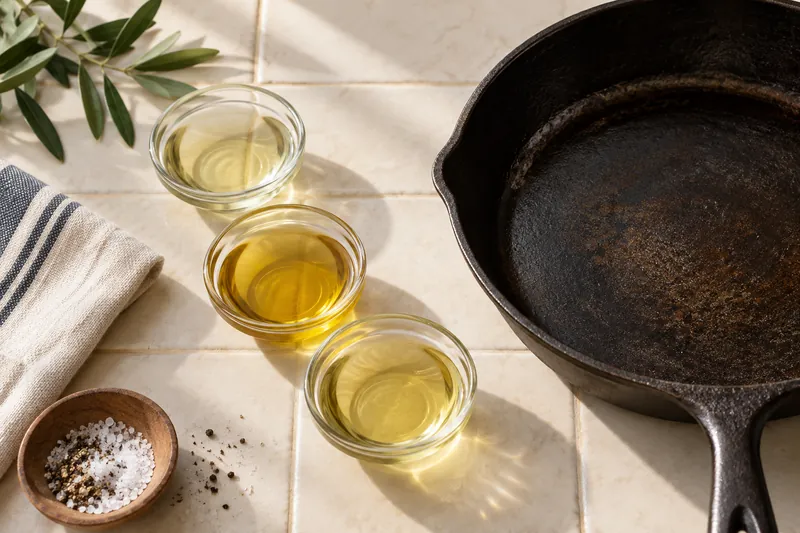
Perspective. An editorial reflection on preferences and everyday life. It does not report a survey or classify people by their tastes.
Before you start
A familiar skillet can feel like more than a kitchen tool. Its appeal may have as much to do with attention and continuity as with the material itself.
An object that records use
Some people enjoy seeing a surface change through ordinary cooking. A mark can remind them of a learned technique or a meal made repeatedly. This is an interpretation of the appeal, not evidence that a darker pan belongs to a more capable cook. Not everyone wants an object that visibly records use.
A small task with a visible ending
Cleaning, drying and putting away a pan can provide a clear endpoint to preparing a meal. For someone who likes that sequence, care becomes part of the pleasure. For someone with less time or different physical needs, the same sequence may be an inconvenience. Neither preference establishes character or taste.
The useful part of the romance
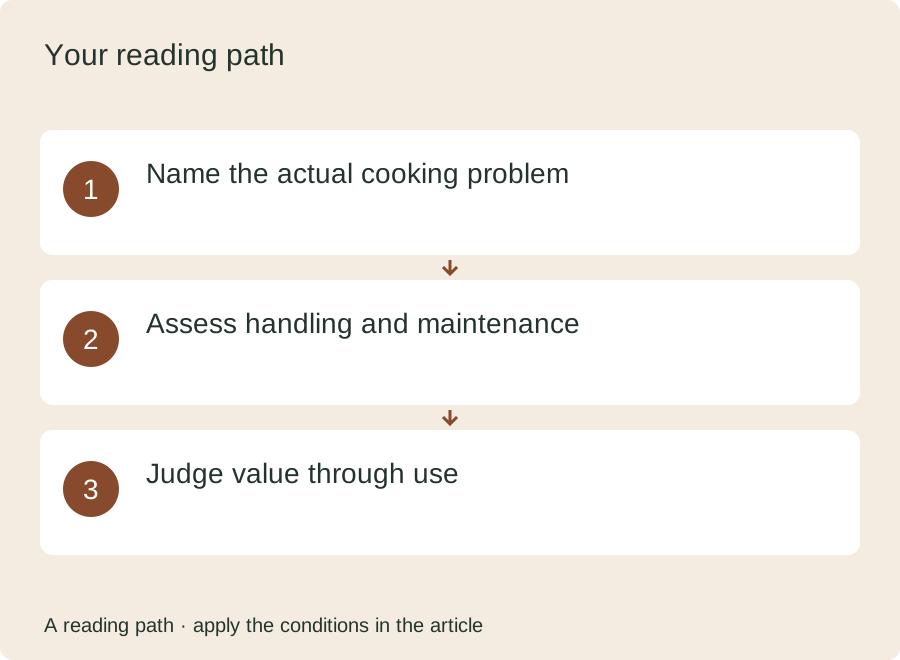
Attachment can encourage care, repair and familiarity. It can also make people reluctant to admit that a particular pan is too heavy or awkward for their kitchen. The best version of this enthusiasm leaves room for practical judgment. Keep an object because it serves you, not because a community says you should love it.
The ordinary dinner is part of the story
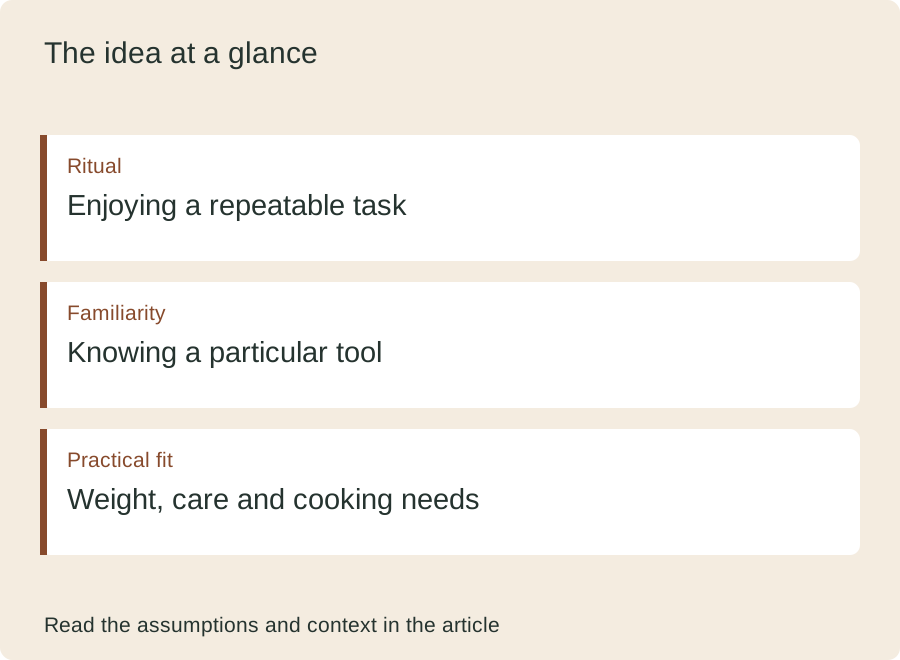
Imagine two people using the same kind of pan. One enjoys the sound of onions hitting the surface and the familiar weight when the pan is lifted. The other finds that weight tiring and the care routine inconvenient. Neither reaction needs correcting. The attachment belongs to the fit between an object and a person’s life. A useful article about the romance of cookware leaves room for both experiences. It can celebrate familiarity without claiming that the person who enjoys the ritual is a better cook, a more authentic person or the owner of a superior kitchen.
A question worth asking yourself
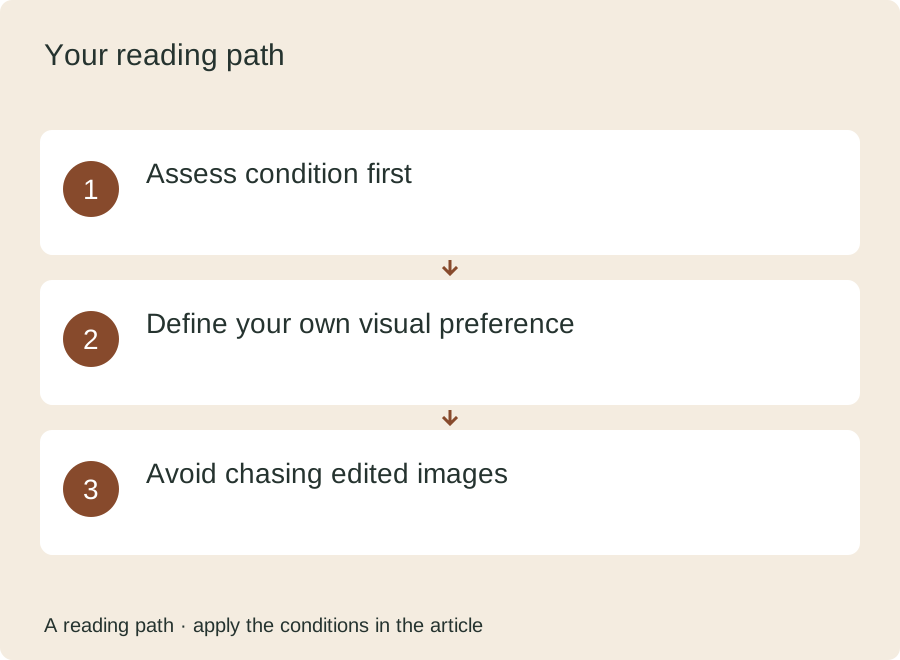
Would you still enjoy the pan if nobody saw it and it never developed a picture-perfect finish? If the answer is yes because you like cooking with it, the preference has a useful foundation. If the attraction is mostly the image, a simpler routine may bring more satisfaction than chasing someone else’s patina.
Practical check: what to observe
Use the questions below to consider your own preferences. This article is an editorial perspective, not a survey or a way to classify other people.
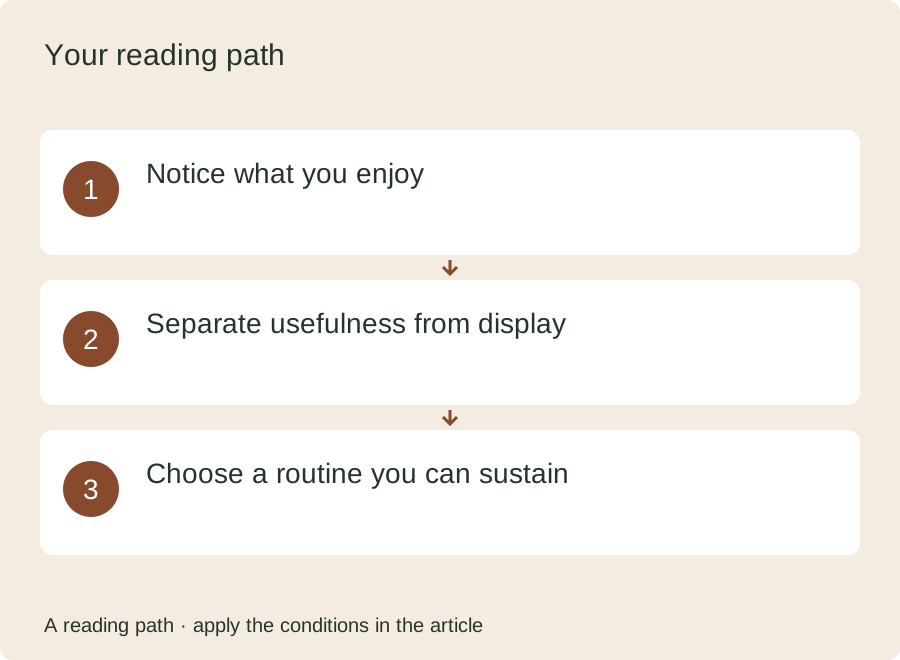
- Notice what you enjoy
- Separate usefulness from display
- Choose a routine you can sustain
Are cast iron fans a particular type of person?
There is no personality diagnosis in a cookware preference. This essay explores possible reasons for the appeal, not a survey or a claim about everyone who owns a skillet.
For more context, see the topic FAQ and glossary. A reference value or example should be read with its units, assumptions and product-specific conditions.
Sources and scope
This is original editorial commentary. Examples of preferences are illustrative, not findings from a survey or psychological study. Read the editorial policy for sourcing, AI assistance and corrections.
Put the explanation to work
Continue reading
Spot a questionable claim or a calculation issue? Read our correction process and contact information. Examples and illustrations are educational; they do not establish product suitability or a laboratory result.