 SkilletLore
Perspectives
Why a used-looking pan can belong in a beautiful kitchen
A useful kitchen does not stay untouched.
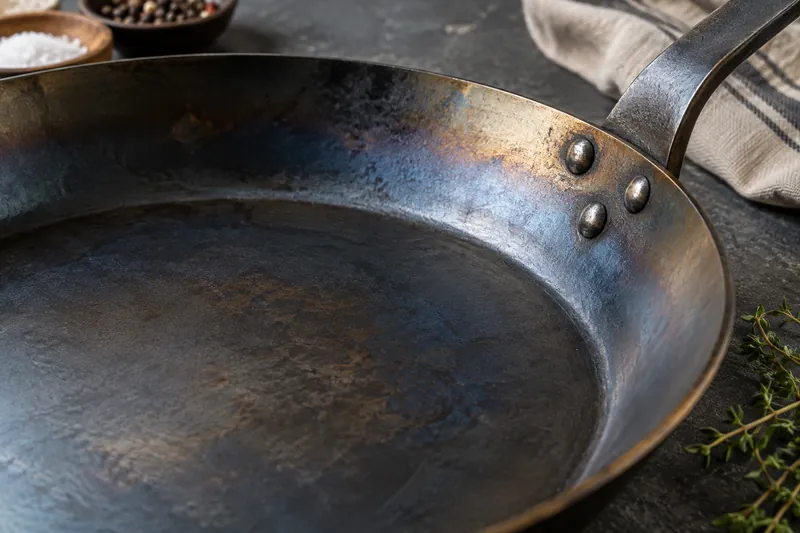
Perspective. An editorial reflection on preferences and everyday life. It does not report a survey or classify people by their tastes.
Before you start
A useful kitchen does not stay untouched. The challenge is deciding which signs of use are ordinary and which deserve attention.
Appearance is not the whole condition
A seasoned surface can look uneven without that appearance alone diagnosing a problem. The reverse is also true: an attractive coating does not establish integrity. Separating visual preference from condition lets you enjoy an object without ignoring damage or treating every mark as an emergency.
The pressure of the pristine image
Online photographs often show cookware at a selected moment under controlled light. A kitchen used every day is a different setting. Comparing the two can encourage unnecessary polishing, stripping or replacement. You are allowed to prefer a tidy kitchen without requiring every working surface to resemble a product photograph.
Build your own standard
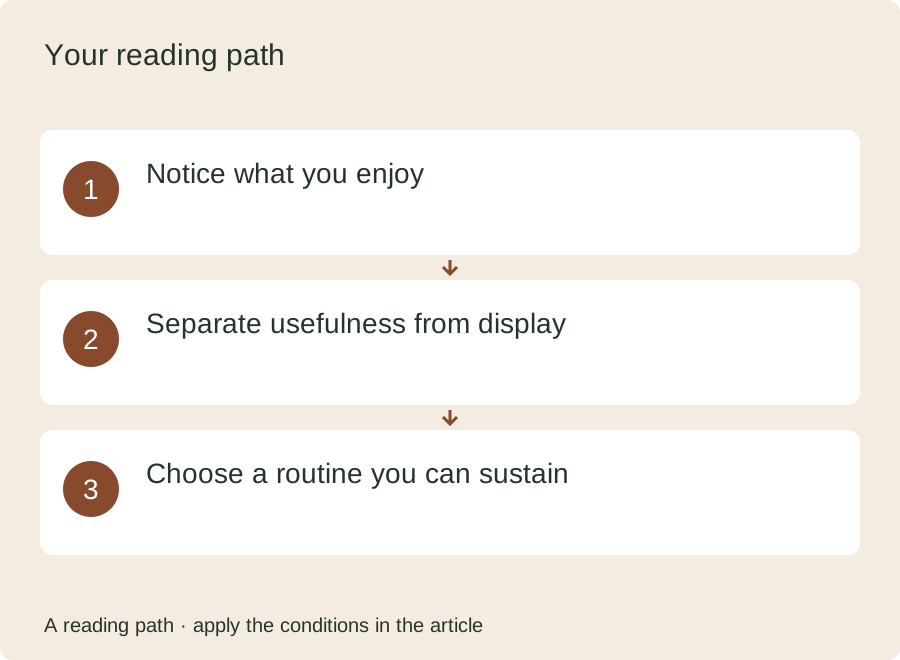
Decide what ready for use means: clean, appropriate for the recipe, safely stored and comfortable to handle. Then decide what appearance you personally enjoy. These two lists may overlap, but they are not identical. Keeping them separate makes care decisions less emotional when a mark appears.
Choose a standard you can live with
Consider the difference between a photograph prepared for a catalog and the counter after an ordinary meal. Both can be attractive, but they serve different purposes. A working kitchen needs a standard that allows food preparation, cleaning and repeated use without constant disappointment over ordinary visual change. Write down what actually concerns you: cleanliness, uncertain coating, an uneven color or simply comparison with an image online. Naming the concern helps you decide whether the next step is care, further identification or permission to stop treating every visible mark as a project.
Leave room for other preferences
Some people prefer surfaces that change with age; others prefer a more uniform appearance. Neither is a reliable measure of authenticity or good taste. The useful question is whether the choice helps you cook and care for your tools without unnecessary anxiety.
Practical check: what to observe
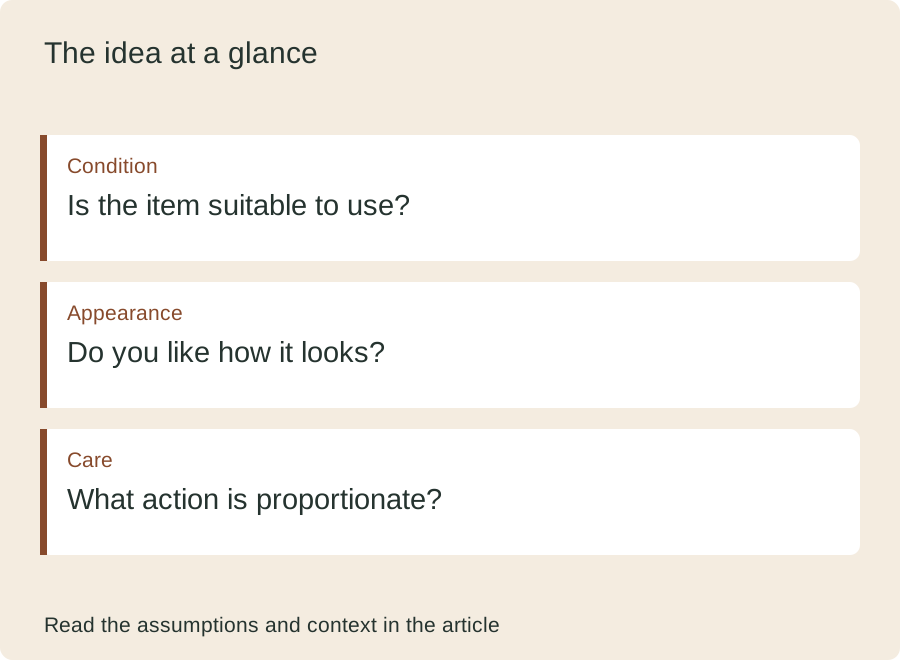
Use the questions below to consider your own preferences. This article is an editorial perspective, not a survey or a way to classify other people.
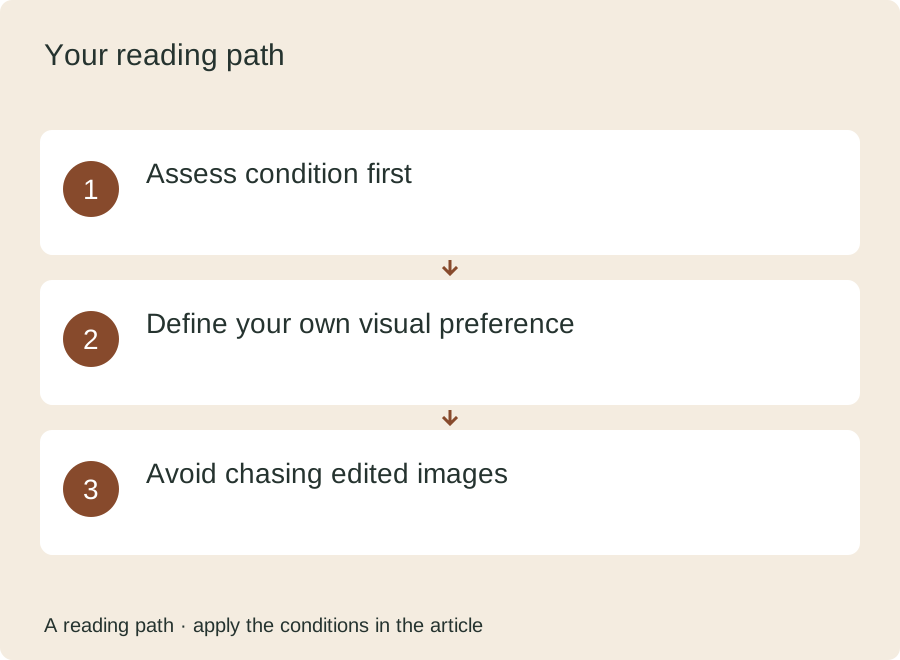
- Assess condition first
- Define your own visual preference
- Avoid chasing edited images
Should I ignore every blemish as patina?
No. Enjoying signs of use does not mean overlooking cracks, corrosion or loose coating. Identify the material and the change before deciding it is cosmetic.
For more context, see the topic FAQ and glossary. A reference value or example should be read with its units, assumptions and product-specific conditions.
Sources and scope
This is original editorial commentary. Examples of preferences are illustrative, not findings from a survey or psychological study. Read the editorial policy for sourcing, AI assistance and corrections.
Put the explanation to work
Continue reading
Spot a questionable claim or a calculation issue? Read our correction process and contact information. Examples and illustrations are educational; they do not establish product suitability or a laboratory result.