 SkilletLore
Explainers
The real secret to an easier one-pan dinner is the order
One pan does not mean every ingredient belongs in it at the same moment.
Before you start
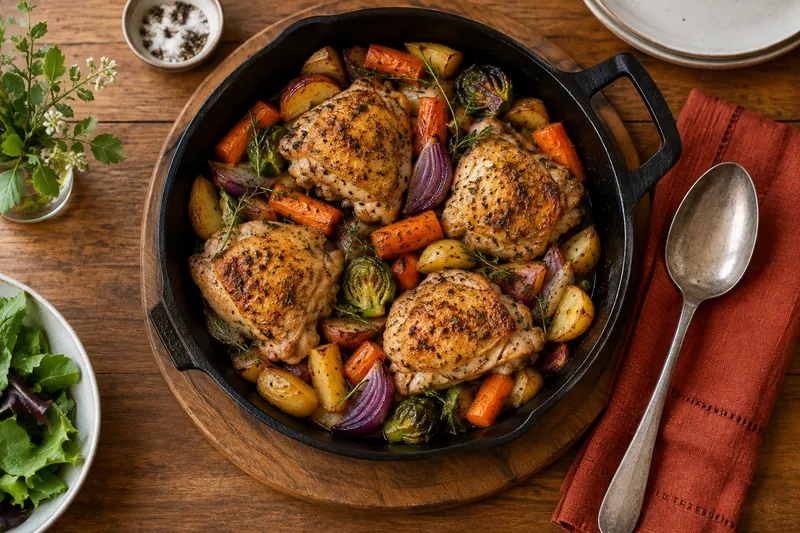
One pan does not mean every ingredient belongs in it at the same moment. A little sequencing can make a recipe easier to control.
List the tasks before the ingredients
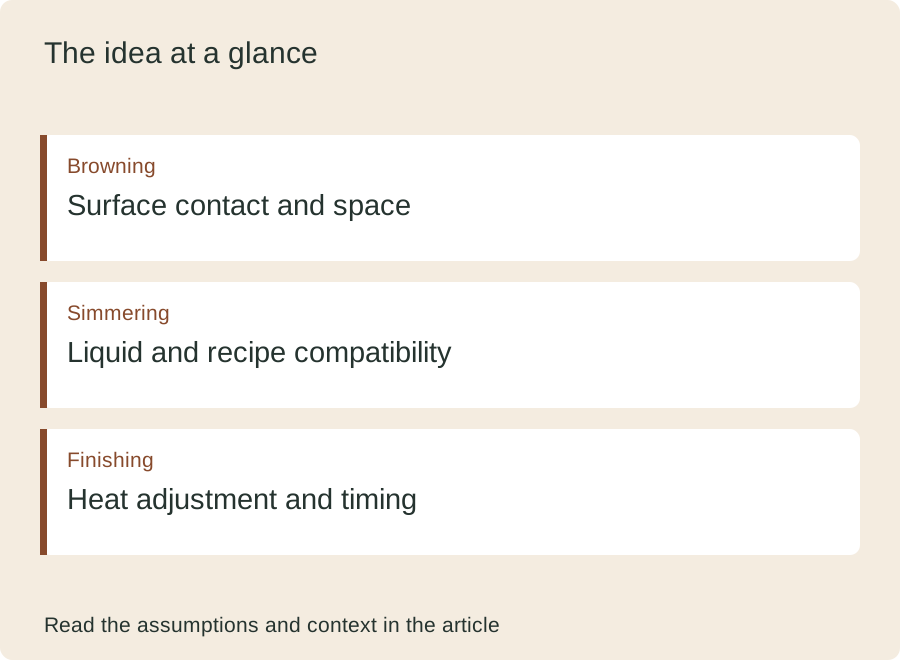
A recipe might require browning, softening, simmering and finishing a sauce. Each stage uses the surface differently. Think about which ingredients need direct contact with the pan and which need moisture. This is a workflow question rather than a reason to run the burner at one setting throughout.
Plan temporary space
A plate or bowl for ingredients removed between stages can preserve pan space. The goal is not to achieve the smallest possible washing-up count at the expense of control. Handle raw and cooked ingredients with appropriate food-safety separation and follow a reliable recipe for doneness.
Watch what stays in the pan
Fond, fat and residual moisture affect the next stage. A browned deposit and a burnt deposit are not interchangeable. Before adding the next ingredient, assess whether the current heat and surface are suitable. Recipe timing is a guide; your burner and batch size may differ.
Plan the order, not only the ingredient list
For a hypothetical dinner with vegetables and another ingredient that needs separate handling, sketch the order in which components enter and leave the pan. Identify any stage where the surface becomes crowded or liquid changes the cooking process. A temporary holding dish may make the meal easier even if the recipe is described as one-pan. Keep appropriate food-handling requirements in control; the phrase one-pan does not waive them. The useful goal is a coordinated meal with manageable cleanup, not proving that every component can occupy the cooking surface at the same instant.
Build a repeatable version
After cooking, note where you felt rushed or where ingredients crowded the surface. Make one workflow adjustment next time: prepare a component earlier, use a smaller batch or choose a different vessel. This improves the process without pretending that every recipe can be reduced to one universal pan.
Practical check: what to observe
Start with the situation described in this article, then follow the applicable product instructions. Keep a short note of what you observe so a later decision has context.
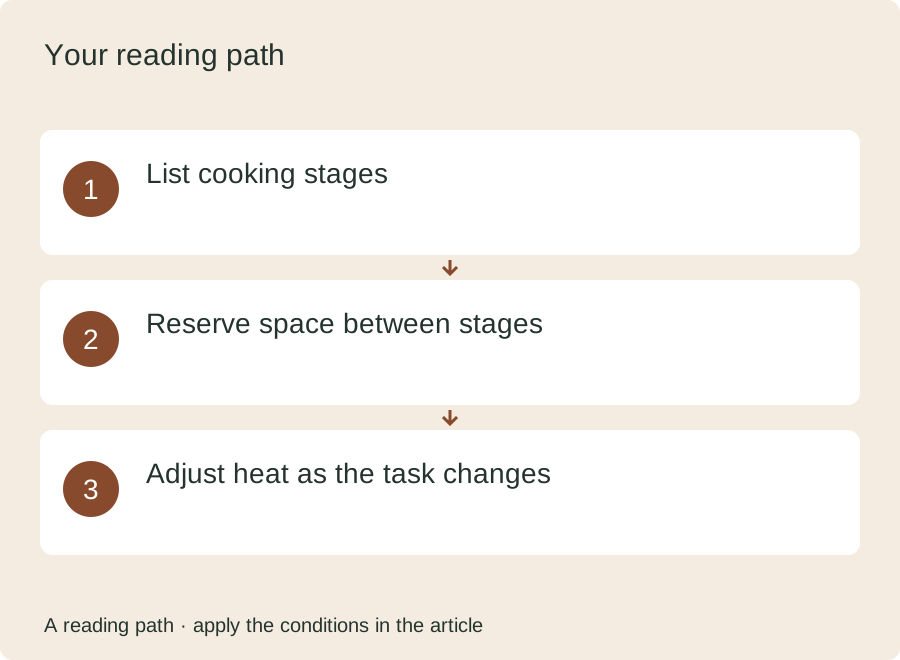
- List cooking stages
- Reserve space between stages
- Adjust heat as the task changes
Is cast iron required for a one-pan meal?
No. Choose a vessel that suits the recipe, ingredients and heat transitions. One-pan is a workflow description, not a material specification.
For more context, see the topic FAQ and glossary. A reference value or example should be read with its units, assumptions and product-specific conditions.
Sources and scope
The reading below provides context for the relevant care or brewing principles. The article’s scenarios and decision questions are original editorial explanations, not independent product tests. Read the editorial policy for sourcing, AI assistance and corrections.
Put the explanation to work
Continue reading
Spot a questionable claim or a calculation issue? Read our correction process and contact information. Examples and illustrations are educational; they do not establish product suitability or a laboratory result.