 SkilletLore
Explainers
Why the five minutes after cooking matter to your skillet
The most useful care routine is one you can repeat.
Before you start
The most useful care routine is one you can repeat. Small decisions after cooking can prevent a minor cleaning job from becoming a restoration project.
Remove uncertainty from the routine
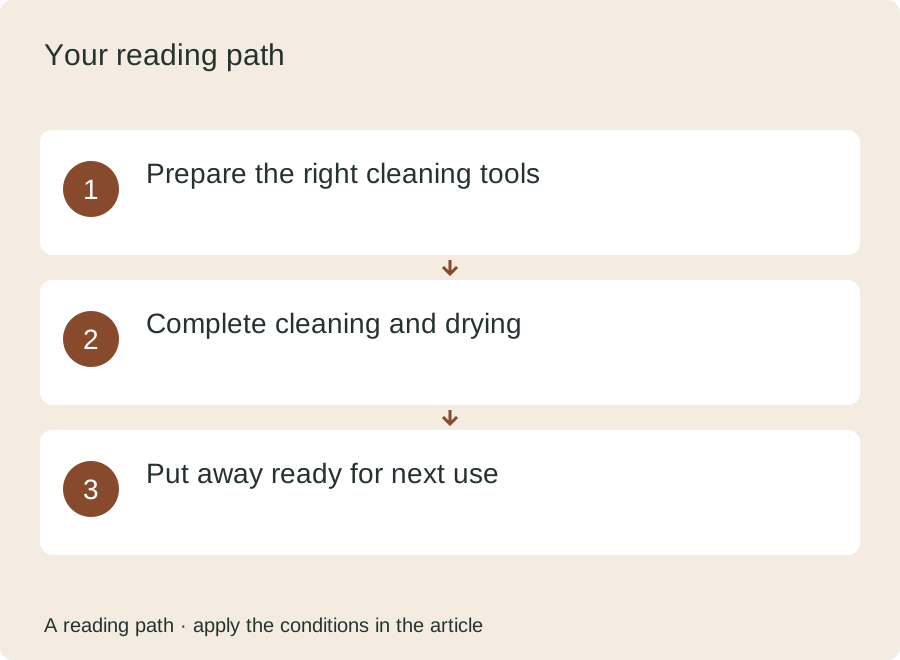
A complicated ritual is easy to postpone. Set up the tools that fit your pan and the manufacturer’s instructions before they are needed. A suitable brush, a dry cloth and a safe storage place make routine care easier than searching for supplies beside a sink full of dishes.
Pay attention to the transition
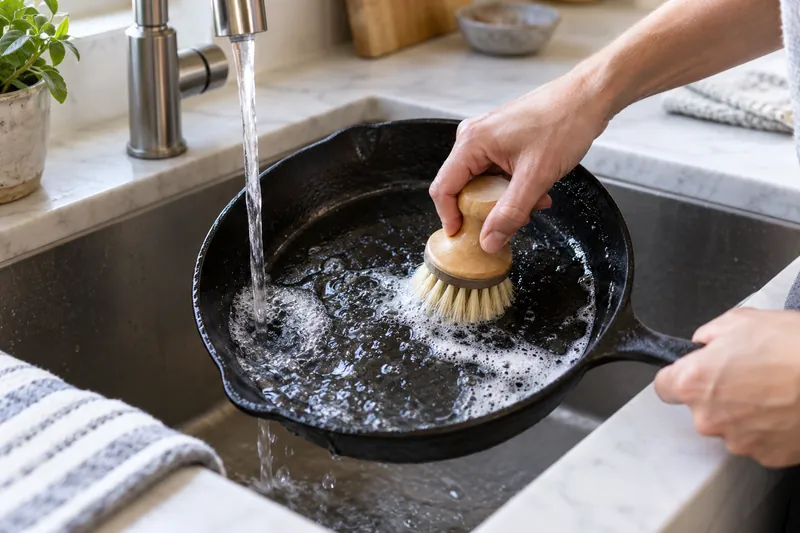
Let the cookware reach an appropriate condition for cleaning; avoid sudden temperature changes that the maker warns against. Then assess what actually needs removing. A pan with ordinary food residue does not require the same response as one with a damaged coating or significant rust.
Make drying a completed step
Do not confuse rinsing with finishing. Check the handle connection, lid and any place where water can remain. Storage should begin with the item ready to sit, not with the hope that trapped moisture will disappear later. Bare iron and enamel need their own product-specific finish to the routine.
Design the routine around the moment it fails
If care repeatedly stops after rinsing, ask what makes the drying and storage step inconvenient. Perhaps the normal resting place is full, or the suitable towel is elsewhere. Arrange the needed items so the permitted care sequence is easy to complete. This is a workflow adjustment, not a new restoration technique. A short routine that happens reliably is more useful than an elaborate ritual saved for weekends. Revisit the setup when your kitchen changes; a habit often disappears because its physical arrangement stopped making sense, not because the pan requires extraordinary dedication.
A realistic measure of success
Success is a pan that is clean and ready when you need it again. It is not a surface that looks identical to an edited online photograph. If the routine works consistently, avoid adding unnecessary steps merely because someone else’s cookware looks darker or glossier.
Practical check: what to observe
Start with the situation described in this article, then follow the applicable product instructions. Keep a short note of what you observe so a later decision has context.
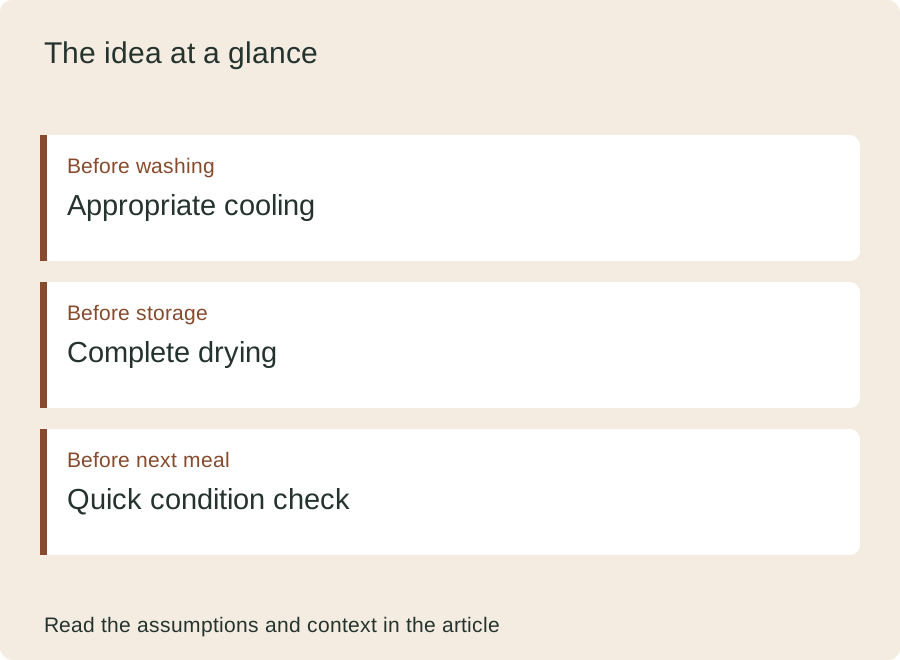
- Prepare the right cleaning tools
- Complete cleaning and drying
- Put away ready for next use
Must I perform a full oven seasoning after every meal?
Not as a universal rule. Use routine care and respond to actual surface condition according to the maker’s guidance.
For more context, see the topic FAQ and glossary. A reference value or example should be read with its units, assumptions and product-specific conditions.
Watch with context
How to Clean Your Cast Iron Skillet.
From Lodge Cast Iron. An external demonstration to accompany the explanation. Follow the instructions for your own equipment or garment; a video is not evidence for every claim on this page.
Player requested. If the player remains blank or reports an error, use the direct YouTube link below.
Loading the player connects to YouTube and may share your IP address and browser information. YouTube may process data and use storage under its own policies. Video privacy details.
If playback is unavailable, watch “How to Clean Your Cast Iron Skillet.” on YouTube.
Sources and scope
The reading below provides context for the relevant care or brewing principles. The article’s scenarios and decision questions are original editorial explanations, not independent product tests. Read the editorial policy for sourcing, AI assistance and corrections.
Put the explanation to work
Continue reading
Spot a questionable claim or a calculation issue? Read our correction process and contact information. Examples and illustrations are educational; they do not establish product suitability or a laboratory result.