 SkilletLore
Explainers
Why preheating matters more than turning the heat up
A pale edge and a scorched center are clues to a heating problem.
Before you start
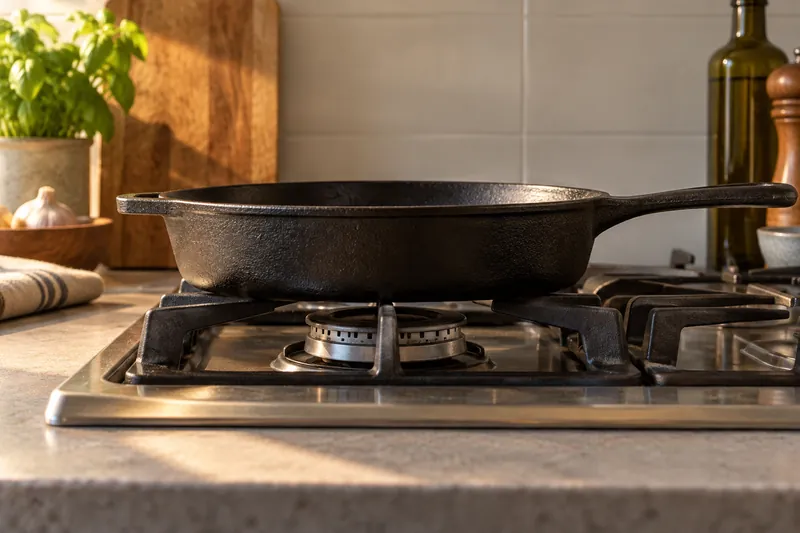
A pale edge and a scorched center are clues to a heating problem. More burner power can make the difference larger before it makes the pan useful.
The burner heats a region first
A pan does not instantly reach one uniform temperature. Its geometry, material, base thickness and the size of the active burner all matter. A small heat source under a wide pan can create a strong center-to-edge difference. This is why a single recipe instruction such as medium-high is not a transferable temperature measurement.
Time and power are different controls
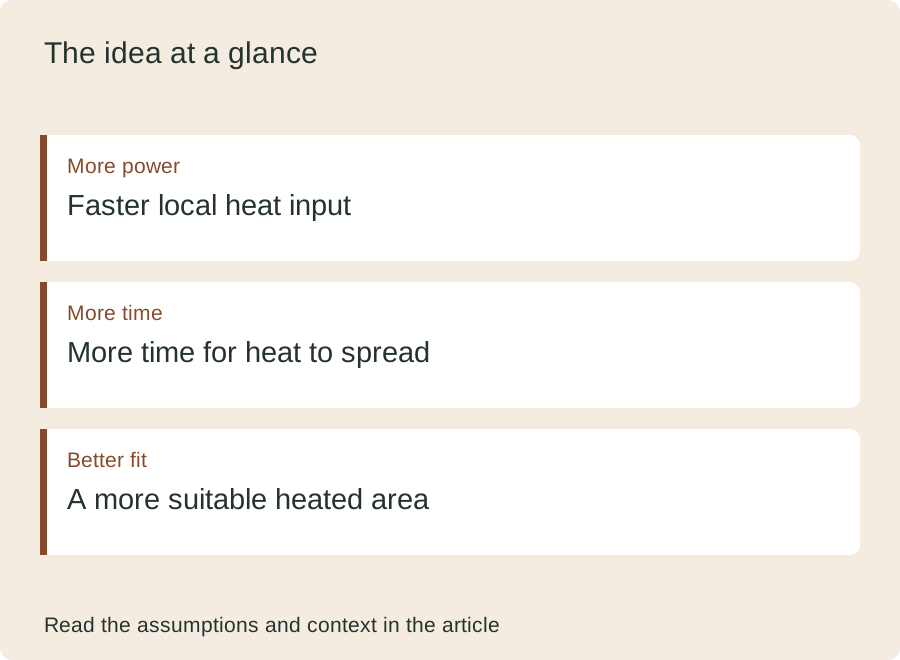
Raising power increases heat input. Waiting gives heat time to spread, although losses continue at the same time. You are managing both processes when you preheat. Use the pan maker’s guidance, particularly for enamel, and avoid leaving empty cookware unattended. The aim is an appropriate cooking surface, not the highest temperature possible.
Try a controlled comparison
On two occasions, cook the same size portion using the same burner and pan. Keep the ingredient preparation and fat similar. Compare a gentler, gradual preheat with your usual approach. Note where browning begins and whether the edges catch up. This is a kitchen comparison, not a calibrated thermal-conductivity test.
Read a pattern instead of a single mark
Picture three similar pieces of food placed near the center, halfway out and near the edge. If the center repeatedly browns first, that pattern is more informative than saying the pan runs hot. Do not treat this informal observation as a calibrated temperature map: food thickness, moisture and contact differ. It can still help you ask a better question. Would a better-matched burner or a smaller cooking area suit the meal? A useful response addresses the pattern instead of increasing power and hoping the cooler edge will catch up before the center overcooks.
Read the food as well as the pan
Browning, smoke and the behavior of cooking fat give context, but none is a universal thermometer. If one area repeatedly burns while another stays pale, reconsider burner fit and batch size. Increasing the preheat period indefinitely is not a solution for incompatible equipment.
Practical check: what to observe
Start with the situation described in this article, then follow the applicable product instructions. Keep a short note of what you observe so a later decision has context.
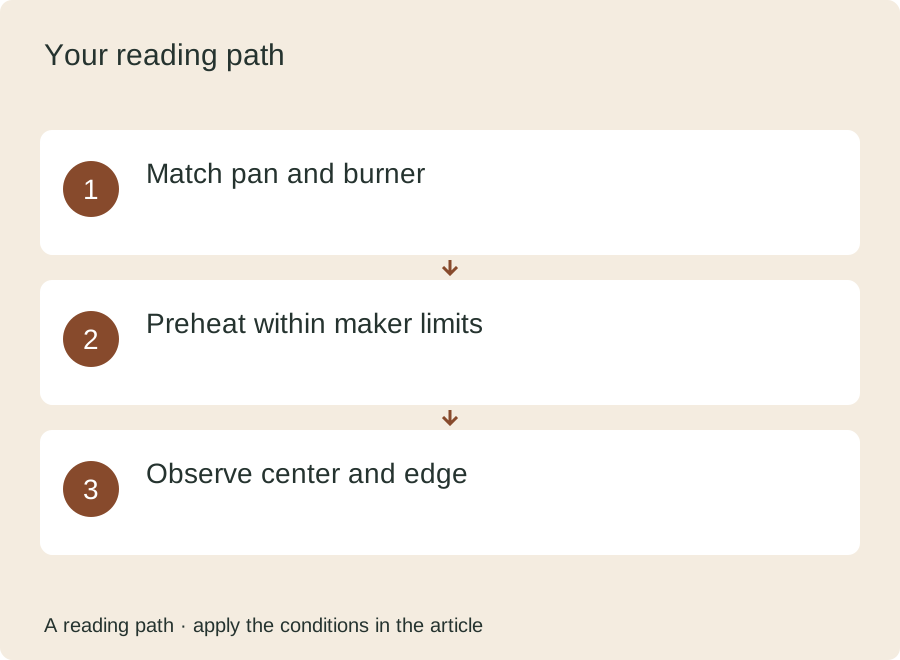
- Match pan and burner
- Preheat within maker limits
- Observe center and edge
Does a water-drop test give an exact temperature?
No. Droplet behavior depends on the surface and conditions. Use it only within an appropriate technique, not as a universal numerical measurement.
For more context, see the topic FAQ and glossary. A reference value or example should be read with its units, assumptions and product-specific conditions.
Sources and scope
The reading below provides context for the relevant care or brewing principles. The article’s scenarios and decision questions are original editorial explanations, not independent product tests. Read the editorial policy for sourcing, AI assistance and corrections.
Put the explanation to work
Continue reading
Spot a questionable claim or a calculation issue? Read our correction process and contact information. Examples and illustrations are educational; they do not establish product suitability or a laboratory result.