 SkilletLore
Oil Polymerization & Seasoning Chemistry
Cooking acidic food in cast iron
A short tomato-based pan sauce and a long braise are different decisions.
Before you start
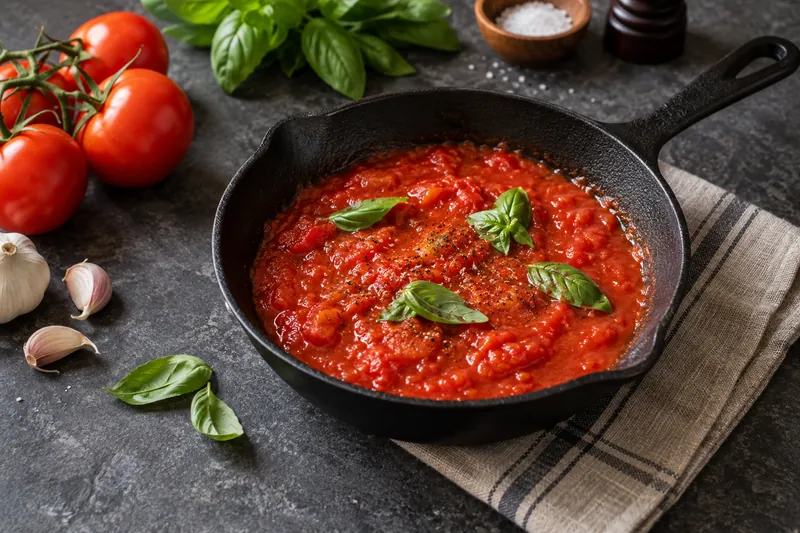
A short tomato-based pan sauce and a long braise are different decisions. If the seasoning is new, patchy, or already lifting, use stainless steel or intact enamel for the acidic dish. With established bare iron, judge the finished food and the surface after cleaning; do not interpret a minute count as a guarantee that no iron can transfer.
Few topics spark more debate among cast iron owners than cooking tomato sauce, wine reductions, or lemon-juice pan sauces in a seasoned skillet. One camp insists that any contact with tomatoes will strip a pan down to bare silver metal and ruin dinner with a rusty metallic taste; the other camp simmers Sunday marinara for three hours in a Lodge Dutch oven without concern. Both experiences are chemically real—and the boundary between them is governed by three quantitative variables: seasoning film continuity (pinhole density), organic acid chelation constants (pK_a and stability constant log K), and simmer contact time (t). You can diagnose acid-stripped gray patches and metallic off-flavors in our Cast Iron, Carbon Steel & Clad Stainless Defect Diagnostic Matrix.
The Two Chemical Mechanisms: Ester Hydrolysis & Organic Acid Chelation
A well-seasoned cast iron or carbon steel pan is coated in a 5 to 20 µm hydrophobic polymer network of cross-linked triglycerides (Polymerization Chemistry: How Drying Oils Bond to Raw Iron). Why do tomato sauces (pH 4.0–4.4), dry white wine (pH 3.1–3.5), and vinegar/lemon reductions (pH 2.3–2.8) challenge this coating far more than boiling water (pH 7.0)?
- Acid-Catalyzed Ester Hydrolysis at
100 °C: While cured ether (C–O–C) and carbon-carbon (C–C) cross-links resist weak acids, the glycerol ester linkages (R-COO-CH₂-) in newly applied, lightly cured seasoning can undergo slow proton-catalyzed reversible hydrolysis (RCOOR' + H₂O + H⁺ ⇌ RCOOH + R'OH) at boiling temperatures (100 °C / 212 °F). - Micro-Pinhole Diffusion & Chelation of Iron Oxides: Even a mature seasoning layer contains microscopic thermal-expansion fissures and graphite-flake boundaries. When hot aqueous citric acid (
H₃Cit), malic acid, or tartaric acid diffuses through a micro-pinhole to the underlyingFe₃O₄ / FeOsubstrate, it does not merely supply protons (H⁺); the polydentate citrate/malate anions chelate (wrap around)Fe²⁺andFe³⁺ions into highly water-soluble coordination complexes, pulling iron out of the pan floor and undermining the adhesion of the surrounding polymer film:
Proton Dissolution + Citrate Chelation at Seasoning Micro-Pinholes (95–100°C):
  1. Acidic Reduction of Surface Oxide / Metallic Iron:
     Fe⁰(s) + 2 H⁺(aq)  ──>  Fe²⁺(aq) (soluble ferrous ion) + H₂(g)
     Fe₃O₄(s) + 8 H⁺(aq) ──>  Fe²⁺(aq) + 2 Fe³⁺(aq) + 4 H₂O(l)

  2. Polydentate Chelation by Citrate / Malate / Tartrate Ligands:
     Fe²⁺(aq) + Citrate³⁻(aq)  ──>  [Fe(Citrate)]⁻(aq)   (log K₁ ≈ 4.4)
     Fe³⁺(aq) + Citrate³⁻(aq)  ──>  [Fe(Citrate)]⁰(aq)   (log K₁ ≈ 11.5, extremely stable!)
Empirical Dietary Iron Leaching Data (mg Fe per 100g Food)
In landmark food-science measurements conducted by Brittin & Nossaman (Journal of the American Dietetic Association) and subsequent controlled cookware trials, researchers measured the exact mass of elemental iron (mg Fe per 100 g wet weight of food) before and after cooking identical recipes in glass (Pyrex) versus cast iron skillets:
| Dish / Culinary Medium | Food pH |
Moisture (%) |
Simmer Time (min) |
Iron in Glass Vessel (mg / 100g) |
Iron in Cast Iron (mg / 100g) |
Net Leached Iron Increase |
|---|---|---|---|---|---|---|
| Spaghetti / Tomato Sauce | 4.1 |
89% |
20–30 min |
0.61 mg |
5.77 mg |
+846% (+5.16 mg) |
| Apple Sauce (Malic Acid) | 3.5 |
88% |
20 min |
0.35 mg |
7.38 mg |
+2,008% (+7.03 mg) |
| Scrambled Eggs | 6.6 |
74% |
3 min |
1.49 mg |
3.47 mg |
+133% (+1.98 mg) |
| Pan-Fried Potatoes (Oil) | 5.8 |
65% |
15 min |
0.42 mg |
0.80 mg |
+90% (+0.38 mg) |
| Cornbread (Baked Dry) | 6.8 |
42% |
25 min |
0.67 mg |
0.86 mg |
+28% (+0.19 mg) |
Three engineering laws emerge immediately from these laboratory numbers:
- Acidity (
pH) + Water Activity + Time Drive Leaching: Dry-baked cornbread (pH 6.8) picks up only+0.19 mg/100gof iron, whereas aqueous acidic apple and tomato simmers (pH 3.5–4.1,20–30 min) leach+5.1 to +7.0 mg of elemental iron per 100g serving. - Taste Threshold (
15 to 25 ppm Fe²⁺): Human taste buds detect dissolved ferrous ions (Fe²⁺) as an astringent, metallic, ink-like flavor once concentration crosses roughly15 to 25 mg/kg (ppm)(1.5 to 2.5 mg/100gin delicate white wine or cream sauces, or> 6–8 mg/100gin heavily spiced tomato sauces). - Nutritional Context (
RDAvs.UL): The NIH Recommended Dietary Allowance (RDA) for dietary iron is8 mg/dayfor adult men and postmenopausal women (18 mg/dayfor premenopausal women), with a Tolerable Upper Intake Level (UL) of45 mg/day(and strict clinical avoidance for individuals with hereditary hemochromatosis).
Safe Time Windows by Pan Maturity and Dish Type
Whether an acidic dish harms your seasoning or alters flavor depends on how old your seasoning is and how long the liquid simmers:
- New or Freshly Restored Seasoning (
1 to 5 coats): Still contains microscopic pinholes and unoxidized ester groups. Avoid tomato sauces, wine deglazes, and citrus marinades for the first10–15 cooks; build a dense barrier first with frying, roasting, and cornbread using oils from our Cooking Oil Smoke Point & Polymerization Matrix. - Mature Daily-Driver Cast Iron (
6+ monthsof multi-layer polymer + carbon):- Under 15–20 Minutes (
Safe Window): Pan-deglazing with1/2 cupof wine (2 min), baking eggs in spiced tomato shakshuka (12 min), or finishing fajitas with lime juice causes zero structural peeling. Simply rinse the warm pan after serving and wipe with2 dropsof oil. - Over 30–180 Minutes (
Switch to Enamel or Clad Stainless): Long Sunday Bolognese ragùs, chili con carne, Coq au Vin, and tomato braises should be cooked in a vitrified porcelain enameled cast iron Dutch oven (Enameled Cast Iron Care & Thermal Shock Guide) or 304/316 clad stainless steel (Clad Stainless Steel Diffusivity Guide).
- Under 15–20 Minutes (
If a long tomato simmer ever leaves dull silver-gray patches on the floor of your skillet, do not strip the whole pan: scrub gently with warm water and dish soap (Soap vs. Seasoning), dry on a medium-low burner, and rub 1/2 teaspoon of grapeseed oil or Crisco across the cooking surface until it lightly wisps smoke for 90 seconds.
Practical check: what to observe
Use the same recipe in a nonreactive pan as a comparison. Record cooking time and any metallic taste, then inspect the dry surface. Discoloration alone cannot quantify iron in food.
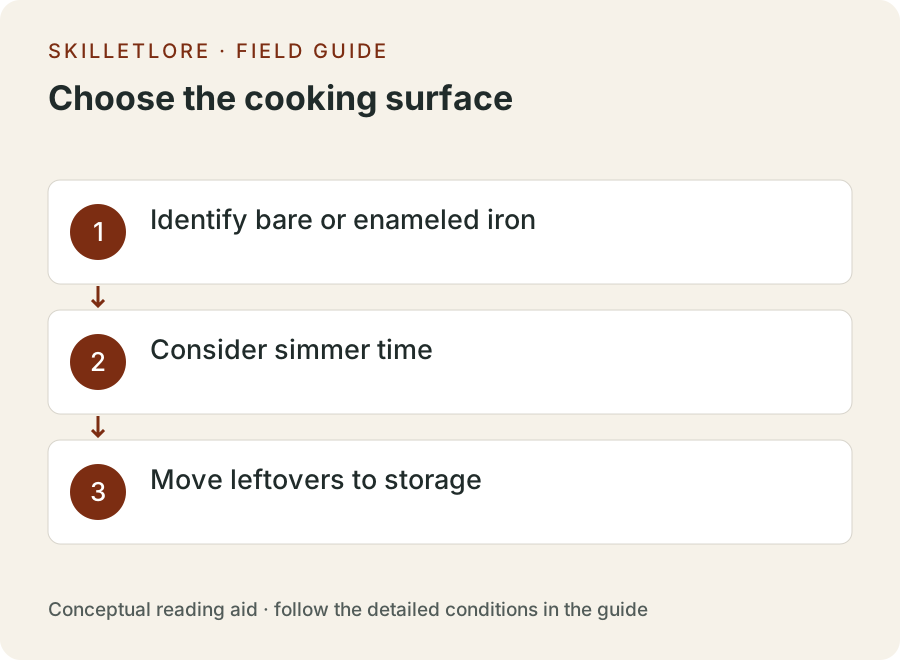
- Identify bare or enameled iron
- Consider simmer time
- Move leftovers to storage
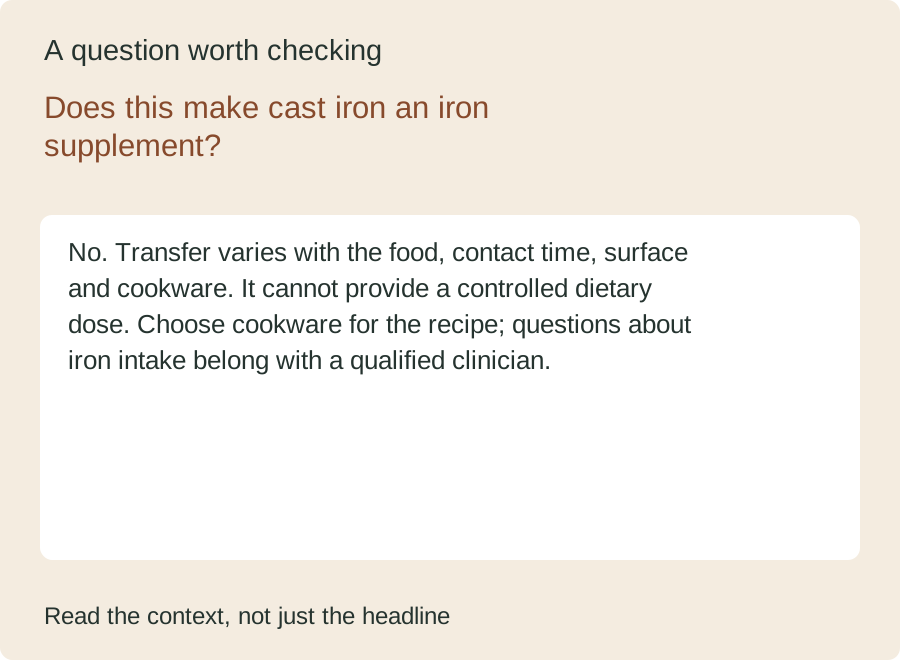
Does this make cast iron an iron supplement?
No. Transfer varies with the food, contact time, surface and cookware. It cannot provide a controlled dietary dose. Choose cookware for the recipe; questions about iron intake belong with a qualified clinician.
For more context, see the topic FAQ and glossary. A reference value or example should be read with its units, assumptions and product-specific conditions.
Sources and scope
The references below were supplied with the original manuscript. A reference is not evidence that every numerical claim has been independently checked. See the source library and our verification status.
- Journal of the American Dietetic Association – Iron Content of Food Cooked in Iron Utensils (Brittin & Nossaman)
- Journal of Food Science – Bioavailability and Leaching Kinetics of Non-Heme Iron from Cast Iron Cookware
- NIH Office of Dietary Supplements – Iron Fact Sheet for Health Professionals (RDA and UL Thresholds)
Put the explanation to work
Continue reading

Spot a questionable claim or a calculation issue? Read our correction process and contact information. Examples and illustrations are educational; they do not establish product suitability or a laboratory result.