 SkilletLore
In pictures
One diagram explains pot capacity and usable cooking space
A pot’s stated volume describes capacity, not how full you should cook it.
Before you start
A pot’s stated volume describes capacity, not how full you should cook it. Headroom and the shape of the food change the practical answer.
Start with a simple cylinder
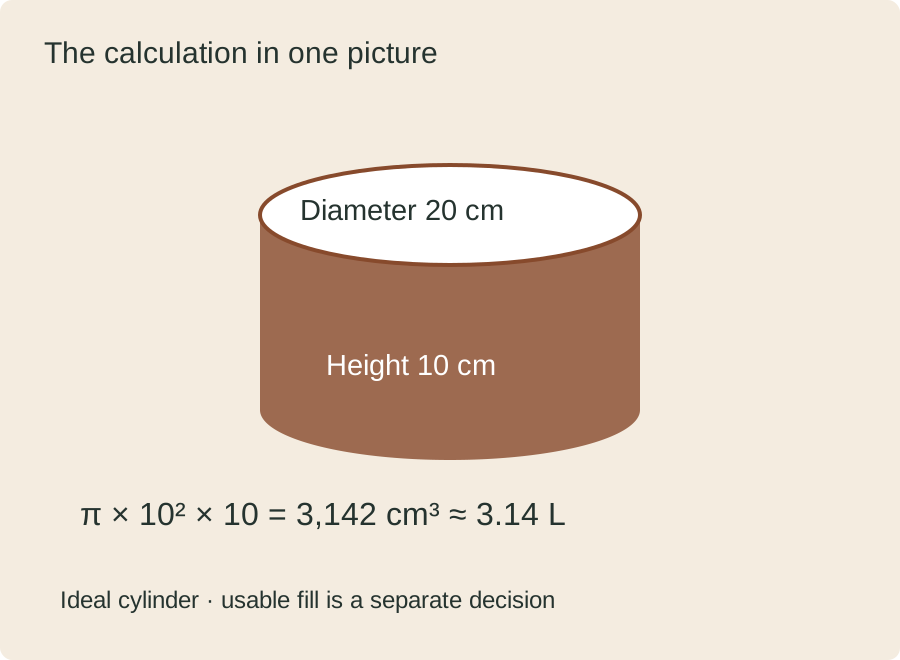
An ideal straight-sided cylinder has volume π × radius squared × height. A vessel with a 20 cm internal diameter and 10 cm height has a geometric volume of about 3,142 cubic centimeters, or 3.14 liters. This is a worked geometry example, not a measurement of a commercial Dutch oven.
Why real pots differ
Rounded bases, tapered walls and lid geometry complicate the cylinder model. Manufacturer capacity may be measured to a different fill point than the one you use for cooking. A stated liter or quart value is useful for comparison, but it does not eliminate the need to follow a recipe’s vessel guidance.
Leave room for the cooking process
Stirring, bubbling and adding ingredients require space above the food. A large joint may occupy the pot differently from a liquid mixture. Instead of selecting an arbitrary universal fill percentage, check the recipe and the cookware instructions for the intended use.
Separate nominal volume from recipe planning
A pot’s listed capacity may describe a measurement different from the fill level you want during cooking. The ideal 3.14-liter cylinder in the diagram is simply an arithmetic object. Actual cookware has a shaped base, curved walls and practical room needed for ingredients and handling. If a recipe expands, foams or needs stirring, do not fill to a mathematical brim just because the total quantity appears to fit. Read the recipe and cookware guidance, and choose an appropriate vessel before heating. A capacity calculation is most useful when it makes these separate decisions visible.
Compare a recipe with a pot
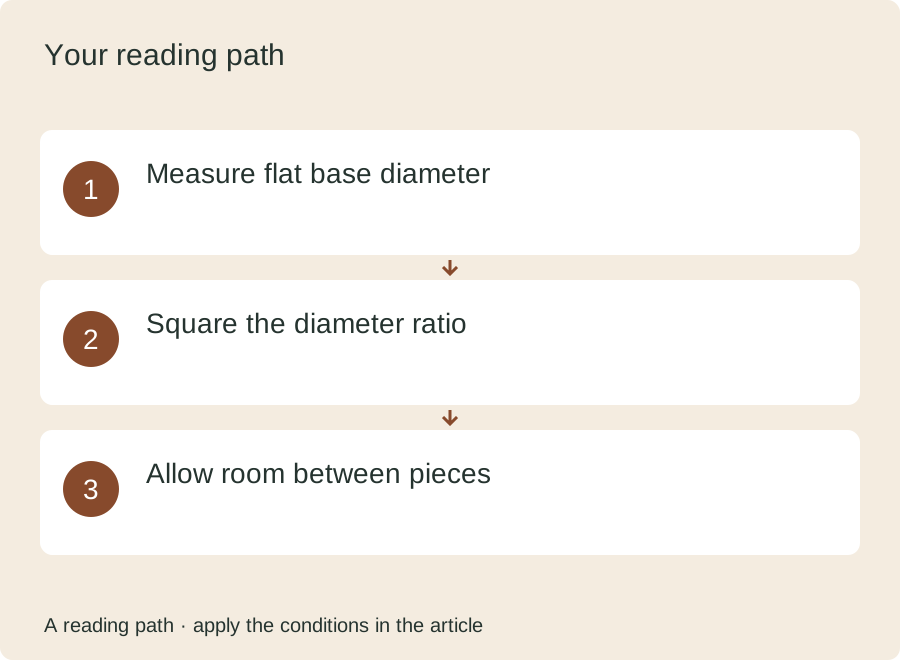
Identify whether the recipe specifies total volume, pan diameter or an actual model. These are not interchangeable. For a shape-dependent task, dimensions may matter more than liters. For transporting or pouring, the weight of the filled pot and the handle design matter too.
Practical check: what to observe
Work through the numbers using the stated units. The examples are illustrative; changing an input or an assumption can change what the result means.
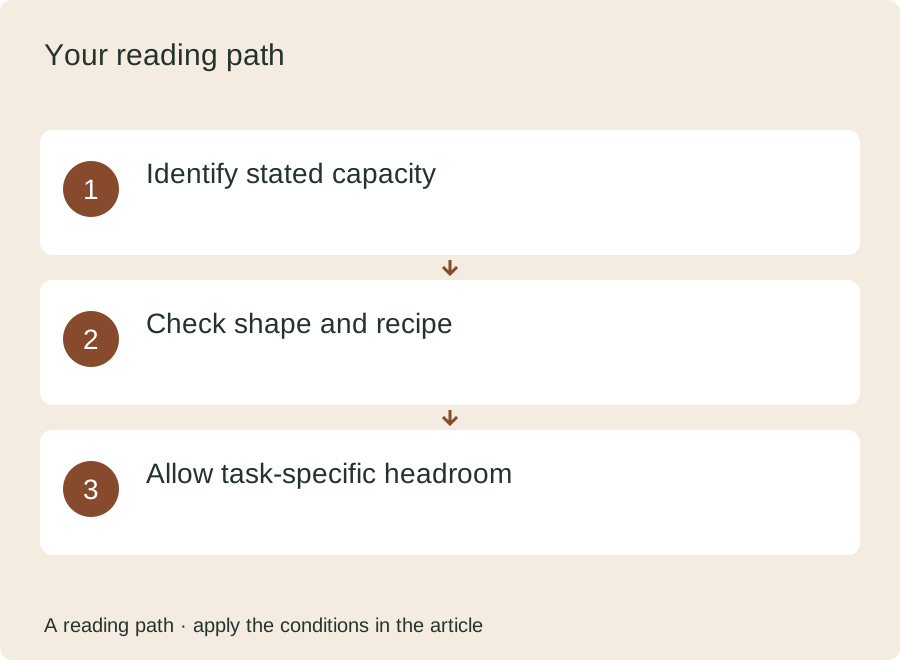
- Identify stated capacity
- Check shape and recipe
- Allow task-specific headroom
Can I double a recipe just because the pot is twice as large?
Volume is only one constraint. Heat transfer, food depth and cooking method can change when the batch changes.
For more context, see the topic FAQ and glossary. A reference value or example should be read with its units, assumptions and product-specific conditions.
Sources and scope
The numerical examples use the arithmetic and assumptions shown in the article. They are hypothetical illustrations, not measurements of a tested product. Read the editorial policy for sourcing, AI assistance and corrections.
Put the explanation to work
Continue reading
Spot a questionable claim or a calculation issue? Read our correction process and contact information. Examples and illustrations are educational; they do not establish product suitability or a laboratory result.