 SkilletLore
Explainers
Cast iron, carbon steel or stainless: which job suits each pan?
Choosing a pan is easier when you start with a cooking task.
Before you start
Choosing a pan is easier when you start with a cooking task. Material names alone do not tell you which option will be easiest to use.
Begin with what the recipe asks
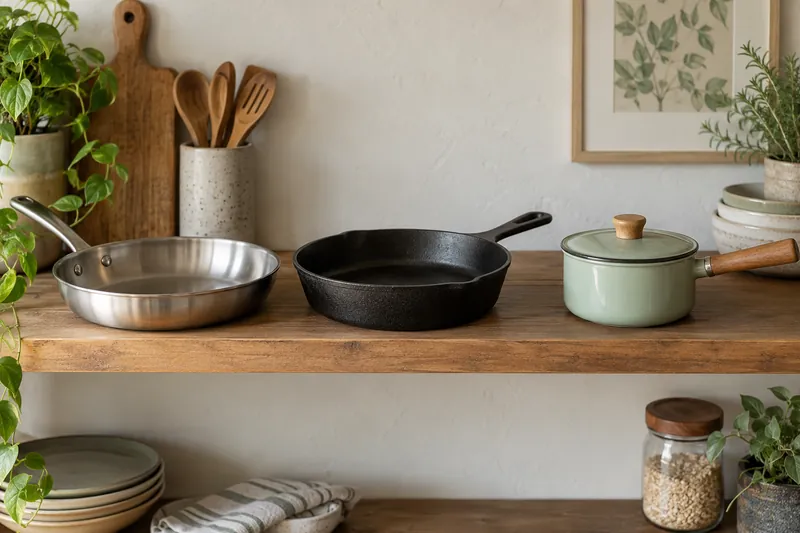
Think about whether you need to toss ingredients, hold a steady cooking surface, simmer an acidic sauce or move between hob and oven. Handle limits, pan weight and the particular construction are part of that decision. A material with excellent properties on paper can still be inconvenient in the shape you own.
Compare care as well as cooking
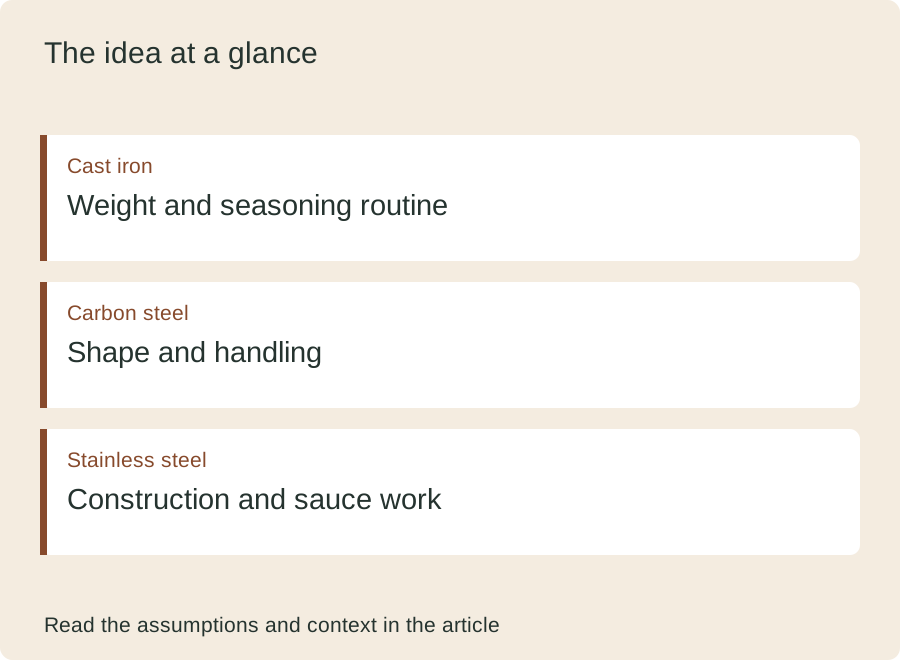
Bare cast iron and carbon steel generally have seasoning routines; stainless does not depend on that kind of coating. Enamel introduces a different surface again. The extra care that one cook enjoys may be the reason another person seldom reaches for a pan. There is no benefit in choosing a tool you consistently avoid using.
A practical three-task comparison
List your three most common meals. For each, note pan movement, sauce ingredients and cleaning preferences. A heavy skillet may suit a dish that stays in place. A lighter pan may suit frequent lifting. A sauce cooked for a long time may favor a nonreactive surface. These are starting questions, not fixed winners for every model.
Make a task card before choosing a material
Consider a meal with a quick sear followed by a sauce. Write down the required surface area, whether the pan must go into an oven, how the handle will be managed and what the recipe asks you to add. Then compare the actual pans you own with those requirements. A material name alone does not answer oven limits, coating condition or whether a lid fits. This small task card also exposes unnecessary purchases: you may already have a pan that does the job, even if an online discussion calls a different material the traditional choice.
Avoid buying the same capability twice
If your current pan already performs a task well, another material needs a clear purpose. Before adding equipment, identify the exact inconvenience you are trying to solve. That question often produces a more useful choice than asking which material professional cooks supposedly prefer.
Practical check: what to observe
Start with the situation described in this article, then follow the applicable product instructions. Keep a short note of what you observe so a later decision has context.
- List your common meals
- Compare handling and care
- Choose for a specific task
Is one material the best overall?
No single material resolves every trade-off. Compare complete pans, your cooktop and your routine, then choose the combination that fits.
For more context, see the topic FAQ and glossary. A reference value or example should be read with its units, assumptions and product-specific conditions.
Sources and scope
The reading below provides context for the relevant care or brewing principles. The article’s scenarios and decision questions are original editorial explanations, not independent product tests. Read the editorial policy for sourcing, AI assistance and corrections.
Put the explanation to work
Continue reading
Spot a questionable claim or a calculation issue? Read our correction process and contact information. Examples and illustrations are educational; they do not establish product suitability or a laboratory result.