 SkilletLore
In pictures
One chart explains why a 12-inch pan is not just a little bigger
Pan diameter is a length.
Before you start
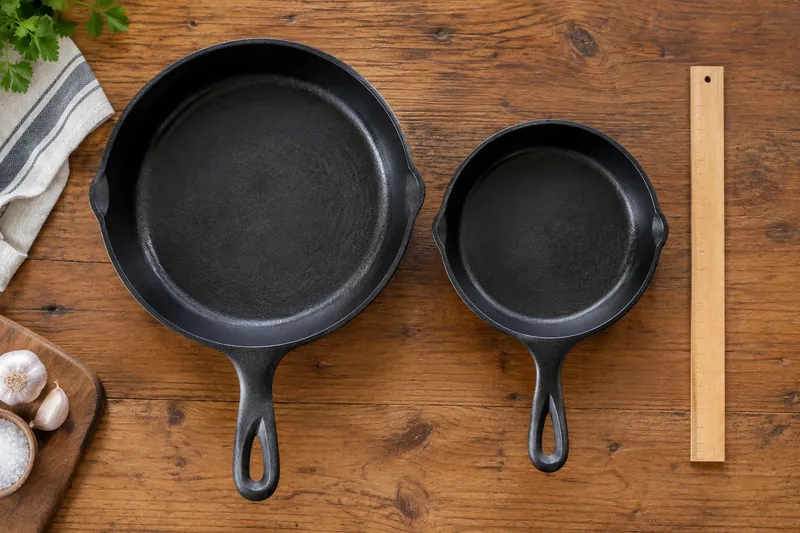
Pan diameter is a length. Cooking space is an area. That difference explains why a small change in diameter can make a noticeably different cooking surface.
The useful calculation
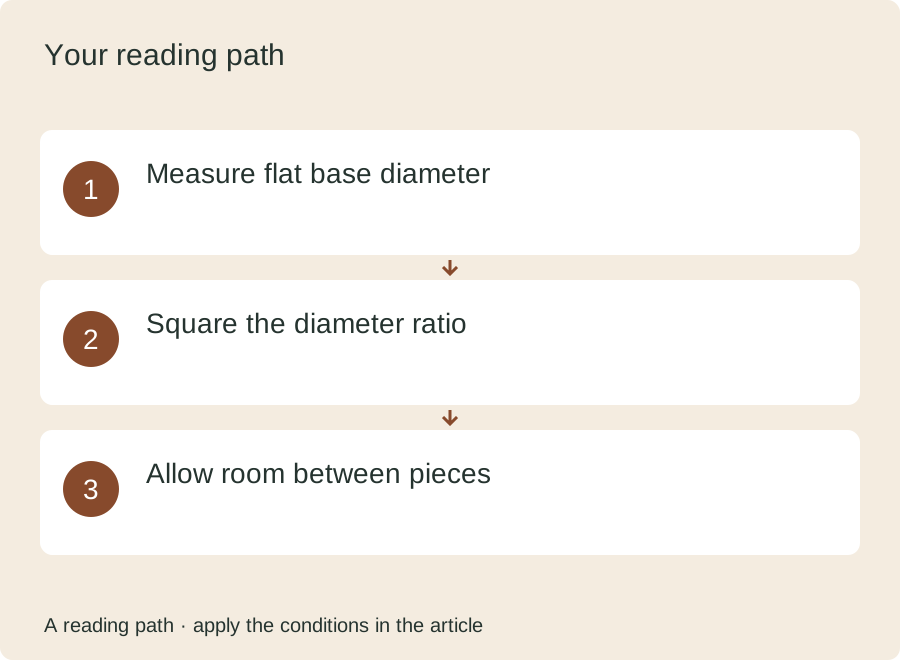
For a circular flat base, area equals π times radius squared. Comparing two circles is even simpler: the area ratio equals the square of their diameter ratio. A 10-inch circle has about 78.5 square inches of area; a 12-inch circle has about 113.1. The larger circle provides about 44% more area, not 20%.
Measure the part you actually cook on
Retail pan sizes often describe the top rim. Sloping sides mean that the usable flat base can be smaller. Measure the cooking floor when comparing how many pieces of food fit without overlapping. Two pans with the same advertised diameter may have different base areas and different capacities for browning.
Worked example: two pan bases
Suppose one flat base measures 8 inches and another measures 10 inches. Divide 10 by 8, then square the result: 1.5625. The second base has approximately 56% more area. That does not guarantee 56% more portions because food shapes, spacing and burner performance also matter. It does explain why rim measurements can mislead.
Try the comparison with your own two pans
Suppose you compare ideal circles of 8 and 10 inches in diameter. Their areas are about 50.3 and 78.5 square inches. The increase is 28.3 square inches, or 56.25% relative to the smaller circle. The same two-inch increase from 10 to 12 inches gives a smaller percentage increase of 44%. This is why a fixed diameter increment does not mean a fixed percentage of extra room. For actual cookware, measure the usable flat base if that is the space you care about; a manufacturer’s rim-to-rim dimension can describe a different circle.
Use the result to plan a batch
Sketch the food pieces with gaps between them rather than packing the entire mathematical area. Consider whether your burner can heat that area well. If it cannot, two smaller batches may be more practical than one crowded large pan. More surface is useful only when the cooking setup can make use of it.
Practical check: what to observe
Work through the numbers using the stated units. The examples are illustrative; changing an input or an assumption can change what the result means.
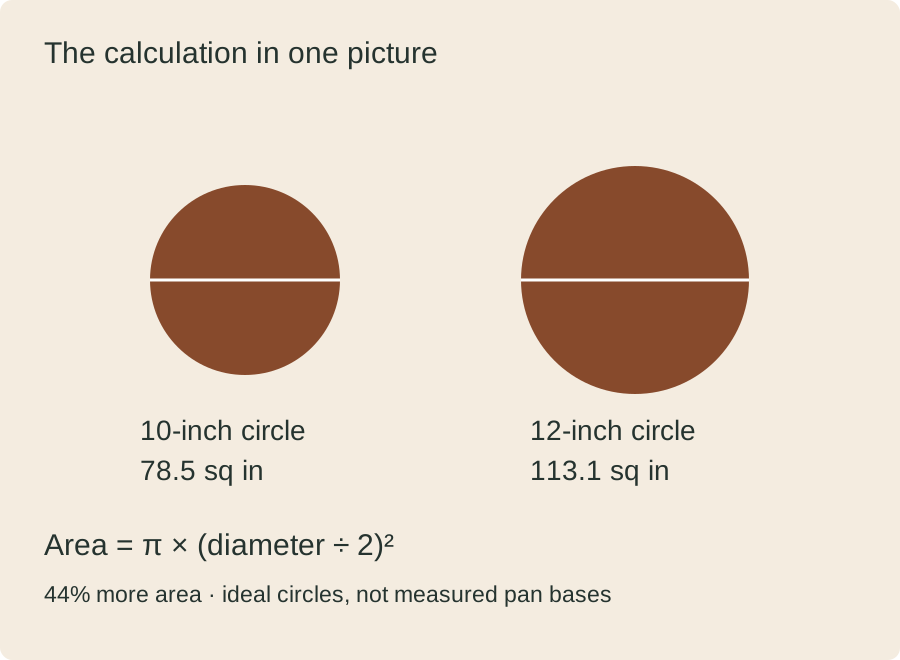
- Measure flat base diameter
- Square the diameter ratio
- Allow room between pieces
Can this formula estimate servings?
It estimates geometric area, not a fixed serving count. Food shape, desired spacing and the recipe determine how many portions fit.
For more context, see the topic FAQ and glossary. A reference value or example should be read with its units, assumptions and product-specific conditions.
Sources and scope
The numerical examples use the arithmetic and assumptions shown in the article. They are hypothetical illustrations, not measurements of a tested product. Read the editorial policy for sourcing, AI assistance and corrections.
Put the explanation to work
Continue reading
Spot a questionable claim or a calculation issue? Read our correction process and contact information. Examples and illustrations are educational; they do not establish product suitability or a laboratory result.