 SkilletLore
Explainers
Restore or replace? A clearer way to judge a damaged pan
Attachment to a familiar pan is understandable.

Before you start
Attachment to a familiar pan is understandable. The useful decision separates a treatable surface issue from damage that cleaning cannot repair.
Classify the problem before the cost
Ordinary residue, a seasoning issue, corrosion, chipped enamel and structural damage belong in different categories. A successful cleaning video about bare iron does not establish a repair method for enamel. Start with the material and the observed defect, then look for the manufacturer’s guidance.
Put uncertainty into the decision
If you cannot identify the coating or previous use, the missing information has a cost. Include the time, materials and specialist assessment needed to resolve it. A low purchase price does not necessarily mean an economical restoration, particularly when the intended use is cooking.
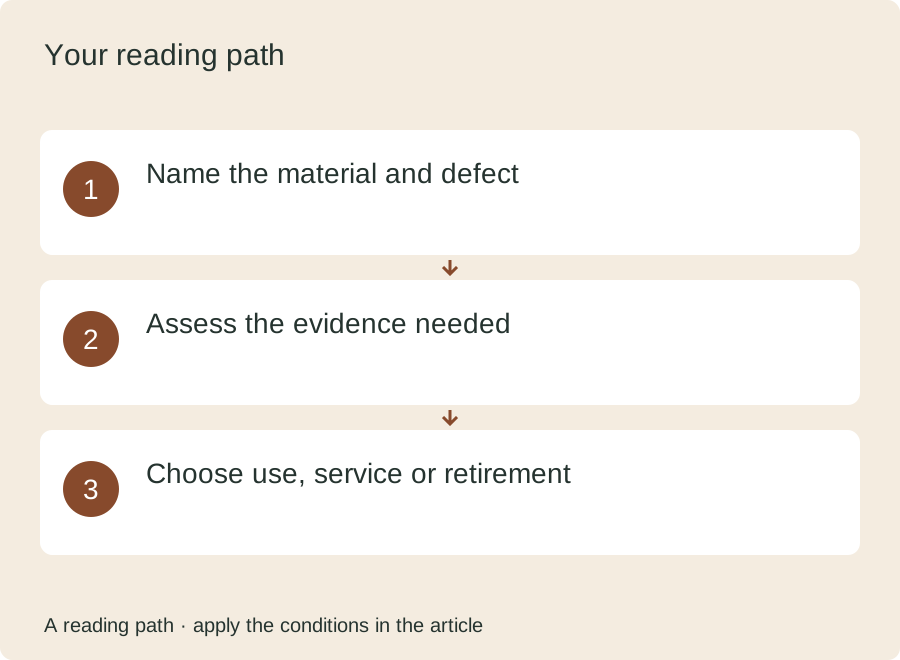
Compare outcomes rather than effort
Hours spent working on an item do not prove it is suitable to use afterward. Ask what evidence would show the problem is resolved. A clean surface may be enough for ordinary residue; a suspected crack or shedding coating requires a different assessment. Decide the stopping point before escalating treatment.
Compare outcomes, not just effort
Suppose one pan has an identifiable cleaning problem while another has a questionable crack or damaged coating. The fact that you are willing to spend a weekend on both does not make the problems equivalent. Ask what successful restoration would actually establish. Cleaning may improve a surface without repairing structural damage. Keep the cost of materials, appropriate handling, time and the remaining uncertainty visible in the comparison. A repair or restoration is worthwhile when it returns a suitable item to a useful role; effort alone is not evidence that the resulting cookware is fit for use.
Preserve the meaning without forcing the use
A meaningful family object does not have to remain a working cooking vessel. If repair or food-contact suitability is uncertain, keeping it as a documented object may preserve its history without relying on it for dinner. That is a legitimate outcome, not a failed restoration.
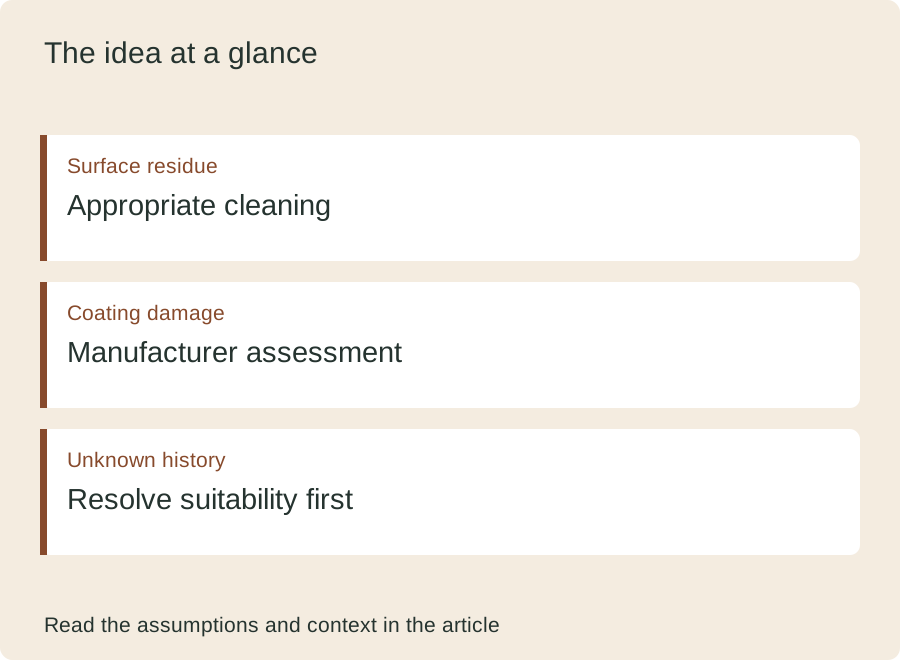
Practical check: what to observe
Start with the situation described in this article, then follow the applicable product instructions. Keep a short note of what you observe so a later decision has context.
- Name the material and defect
- Assess the evidence needed
- Choose use, service or retirement
Does visible improvement prove a repair worked?
No. Appearance and suitability are different questions, especially with structural damage or an unknown coating.
For more context, see the topic FAQ and glossary. A reference value or example should be read with its units, assumptions and product-specific conditions.
Sources and scope
The reading below provides context for the relevant care or brewing principles. The article’s scenarios and decision questions are original editorial explanations, not independent product tests. Read the editorial policy for sourcing, AI assistance and corrections.
Put the explanation to work
Continue reading
Spot a questionable claim or a calculation issue? Read our correction process and contact information. Examples and illustrations are educational; they do not establish product suitability or a laboratory result.