 SkilletLore
Explainers
Buying used cast iron? Look beyond the dark surface
A convincing patina cannot tell you how an old pan was used.
Before you start
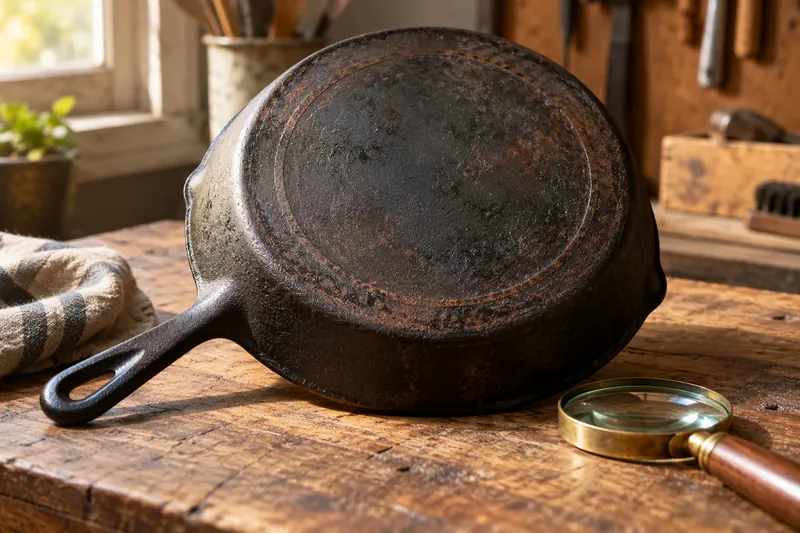
A convincing patina cannot tell you how an old pan was used. Inspection should begin with condition and provenance before appearance.
Ask what can actually be known
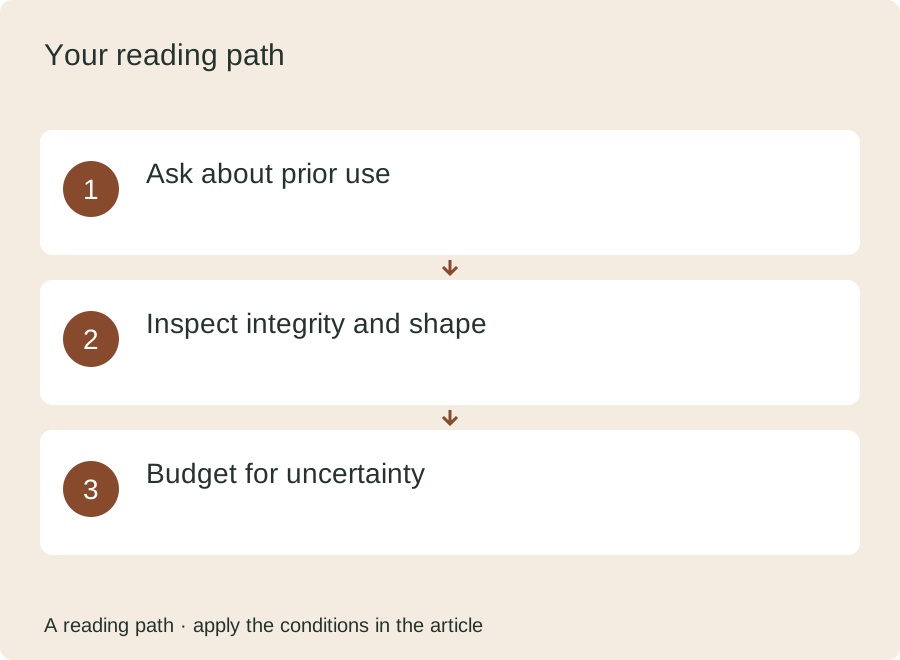
A seller may know the maker but not the previous use. Record that distinction. An attractive surface, famous casting mark or convincing story does not establish food-contact suitability. Unknown coatings or industrial use deserve particular caution rather than a promise that cleaning solves everything.
Inspect shape and integrity
Look at the rim, handle junction, cooking floor and base under good light. Note visible cracks, missing material and severe distortion. A cleaning method can remove deposits; it cannot put missing metal back. Avoid a purchase that depends on a structural repair you are not qualified to assess.
Separate collector value from cooking value
A rare mark may matter to a collector while weight, flatness and handling matter more in your kitchen. Decide which purpose you are buying for. If you want an everyday pan, the cost and uncertainty of restoration belong in the decision along with the asking price.
An inspection checklist for a listing photo
A listing showing only the cooking surface leaves several questions unanswered. Request clear views of the base, sides, handle attachment and any reported damage. Ask the seller to describe condition and prior treatments without assuming they know the full history. A recognizable mark can help identify a piece, but it cannot prove that the pan is structurally sound or suitable for your use. Keep the purchase decision separate from enthusiasm about a maker’s name. If the unresolved condition questions matter more than the asking price, passing on the item can be the simplest outcome.
Keep a condition record
Photograph marks and defects before making changes. Include a scale next to an identifying detail. Preserve the seller’s description without treating it as verified provenance. If the piece is historically important, seek advice before sanding, stripping or otherwise removing evidence.
Practical check: what to observe
Start with the situation described in this article, then follow the applicable product instructions. Keep a short note of what you observe so a later decision has context.
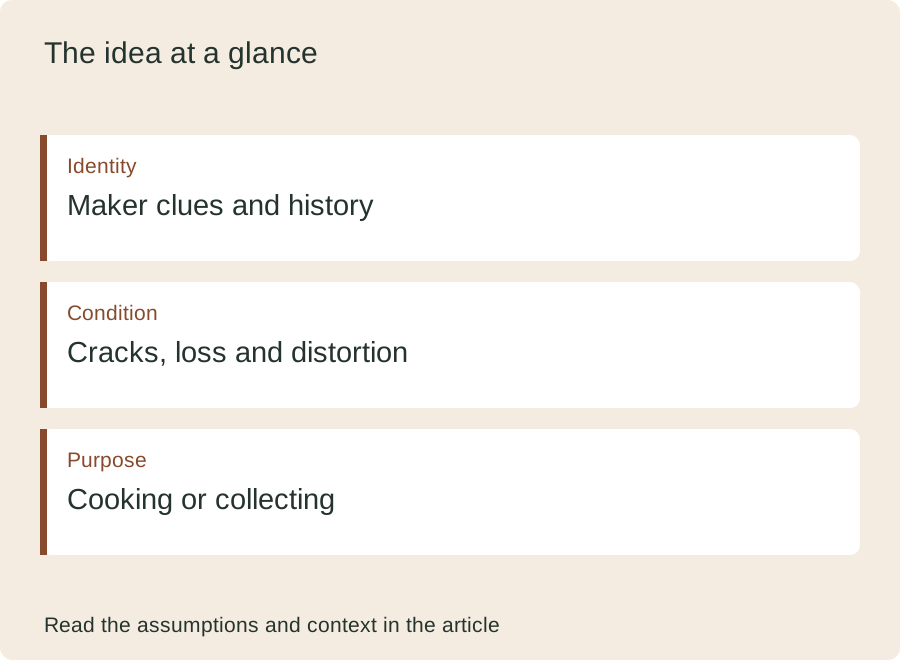
- Ask about prior use
- Inspect integrity and shape
- Budget for uncertainty
Can a home cleaning routine certify an unknown pan as food-safe?
No. Surface cleaning cannot establish the history or composition of an unidentified object. Get appropriate assessment when provenance is uncertain.
For more context, see the topic FAQ and glossary. A reference value or example should be read with its units, assumptions and product-specific conditions.
Sources and scope
The reading below provides context for the relevant care or brewing principles. The article’s scenarios and decision questions are original editorial explanations, not independent product tests. Read the editorial policy for sourcing, AI assistance and corrections.
Put the explanation to work
Continue reading
Spot a questionable claim or a calculation issue? Read our correction process and contact information. Examples and illustrations are educational; they do not establish product suitability or a laboratory result.